
Let's be real. Most 'free' tools are just glorified demos designed to waste your time and push an upgrade. As a founder who lives and breathes this stuff, I’ve seen it all. You're trying to validate an idea, run a quick PPC test, or just capture leads without blowing your budget on a complex system. You don't have time for clunky editors and hidden fees that pop up right when you’re about to launch.
The goal is simple: launch fast, convert well, and not get locked into a system that can't scale. This isn't your typical marketing roundup filled with fluff. It’s my direct, no-nonsense guide to the tools I'd actually recommend to a peer. We're going to break down the 12 best free landing page builder options, looking at what they’re genuinely good for, where their 'free' tier cripples you, and who should actually use each one.
This is for the PPC managers tired of waiting on developers, the agencies juggling client campaigns, and the founders who needed a high-converting page live yesterday. It’s important to distinguish between a landing page builder and a full site builder, though some platforms do both well. For small businesses, choosing the right platform is critical, and you can find comprehensive lists of the best website platforms for small businesses to help inform your decision.
Here, we're focused purely on speed, conversions, and cost-effectiveness for single-purpose pages. Let's find you a tool that helps you build, not one that gets in your way. 🚀
1. dynares
dynares is an AI-first platform engineered to solve a massive pain point for performance marketers: scaling personalized experiences for paid search. It's not just another drag-and-drop tool; it's an end-to-end system designed to automate the entire Google Ads workflow, from keyword research to revenue-optimized landing pages. This is the platform you turn to when you're tired of manually building one-off pages and want a system that connects every single keyword to a unique, high-converting experience.
The core idea is simple but powerful. You feed the platform your brand guidelines and target keywords, and its AI gets to work. It generates thousands of coordinated ad and landing page variants, each specifically tailored to the searcher's intent. This approach directly tackles a fundamental challenge in PPC: maintaining message match from ad to page, which is critical for boosting Quality Score, increasing conversion rates, and ultimately, lowering your cost-per-click.
Why it's our top pick
What truly sets dynares apart is its deep, native integration with the Google Ads ecosystem and its focus on revenue, not just leads. While most builders stop at lead capture, dynares uploads conversion data with actual revenue values back into Google Ads. This is a game-changer because it allows you to optimize your campaigns for what actually matters: Return on Ad Spend (ROAS).
The ability to generate a unique landing page for every single keyword and then optimize for actual revenue is precisely what separates a good campaign from a great one. It closes the loop between spend and profit.
The platform is built for speed and scale, making it one of the best free landing page builder options for teams that need to move fast. It includes an automated A/B testing engine that continuously identifies winning variants, ensuring your campaigns are always improving. This data-driven feedback loop eliminates guesswork and manual analysis, freeing up marketers to focus on strategy. You can learn more about its specific tools on the dynares landing page creator page.
Key features and considerations
- True personalization at scale: Automatically generates keyword-specific landing pages and ads, ensuring perfect message match for every search query.
- Revenue-aware optimization: Integrates with Google Ads to upload conversion values, enabling true ROAS-based campaign optimization.
- End-to-end PPC automation: Covers the entire workflow, from AI-powered keyword research to automated A/B testing and analytics.
Pricing: dynares offers a tiered model. A Free plan is available to get started. Paid plans range from the Starter plan (around $29/month) for small businesses to Pro and Business tiers for growing teams and agencies with higher volume needs.
Best For: PPC managers, digital marketing agencies, and SMB growth teams focused on maximizing performance from their Google Ads spend.
Limitations: Its primary strength is also its main limitation. The platform is hyper-focused on Google Ads, so it isn't an all-in-one solution for channels like social or organic marketing.
2. Webflow
Webflow isn't your typical drag-and-drop tool; it's a professional-grade visual web design platform. Think of it as writing code visually. For those who demand pixel-perfect control over their landing pages without getting bogged down in actual code, Webflow is a beast. It's the go-to for designers and teams who refuse to compromise on aesthetics and responsiveness. Honestly, it's what you use when you want your PPC landing page to look like it was built by a top-tier agency.
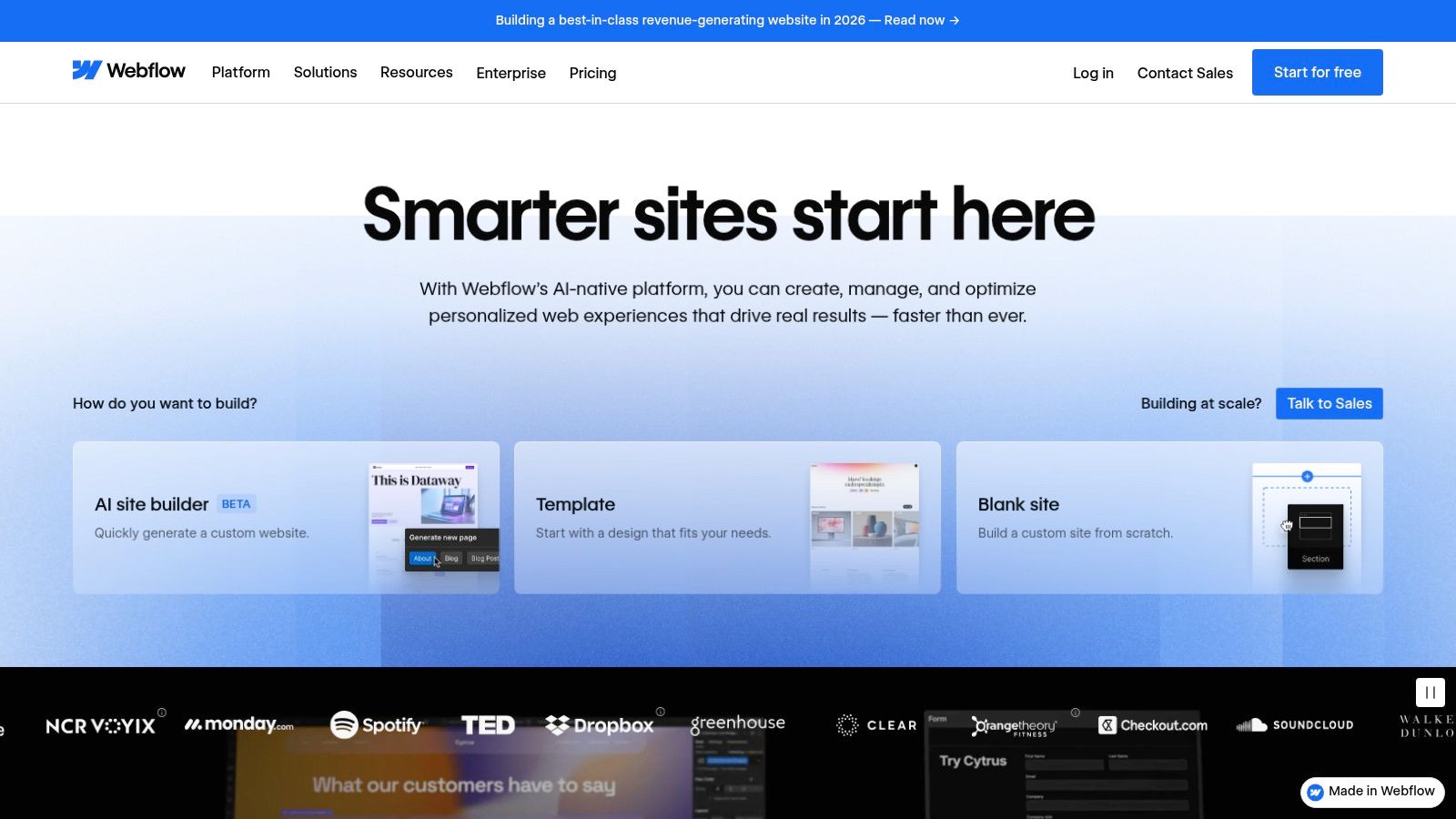
The platform bridges the gap between simple builders and custom development, making it an excellent free landing page builder for sophisticated projects. The free Starter plan lets you publish up to two pages on a webflow.io subdomain, which is perfect for testing a campaign concept or building a portfolio piece. It also gives you access to their stellar designer, which is where the magic happens.
Key features & limitations
The real power of Webflow lies in its granular control. You're not just dragging widgets; you're manipulating CSS properties like flexbox and grid through a visual interface. This means you can build truly custom, high-performing layouts that align perfectly with modern landing page design best practices.
The limitations are real, though. To use a custom domain, unlock the powerful CMS, or get serious marketing features like A/B testing, you have to upgrade. The learning curve is also steeper than other builders on this list, but the payoff in design quality is massive.
- Website: https://webflow.com
3. Carrd
Carrd is the definition of simplicity and speed. It's built for one thing and one thing only: creating beautiful, responsive one-page sites. If you need to spin up a landing page for an event, a personal profile, or a quick lead capture form—and you need it live yesterday—Carrd is your answer. It's incredibly straightforward, cutting out all the bloat you find in more complex builders. Honestly, it’s the perfect tool for when you just need to get a simple, effective page online without any fuss.
This platform proves that you don't need a complicated system to create a high-converting page. It’s an exceptional free landing page builder for marketers who value speed and efficiency. The free plan is ridiculously generous, allowing you to build and publish up to three separate sites on a .carrd.co subdomain. This is more than enough to test multiple campaign ideas without spending a dime.
Key features & limitations
The magic of Carrd is its streamlined no-code editor. You start with a template or a blank canvas and build your page using sections and elements like text, images, and buttons. Everything is mobile-responsive by default, so your pages look great on any device, which is a critical part of modern landing page optimization best practices.
The limitations kick in when you need more advanced marketing features. The free plan doesn't include contact forms, custom code embeds like a Meta Pixel, or Google Analytics integration. To unlock those features and use a custom domain, you need to upgrade to a Pro plan, which, to be fair, is absurdly inexpensive.
- Website: https://carrd.co
4. HubSpot Free Landing Page Builder
HubSpot isn't just a landing page tool; it’s an entire marketing and sales ecosystem disguised as one. If your primary goal is not just to build a page but to turn visitors into leads and systematically nurture them, this is your platform. It’s built around its free CRM, meaning every form submission is instantly a rich contact record, ready for follow-up. Honestly, it's the most logical choice for anyone serious about building a proper lead-generation engine from day one.
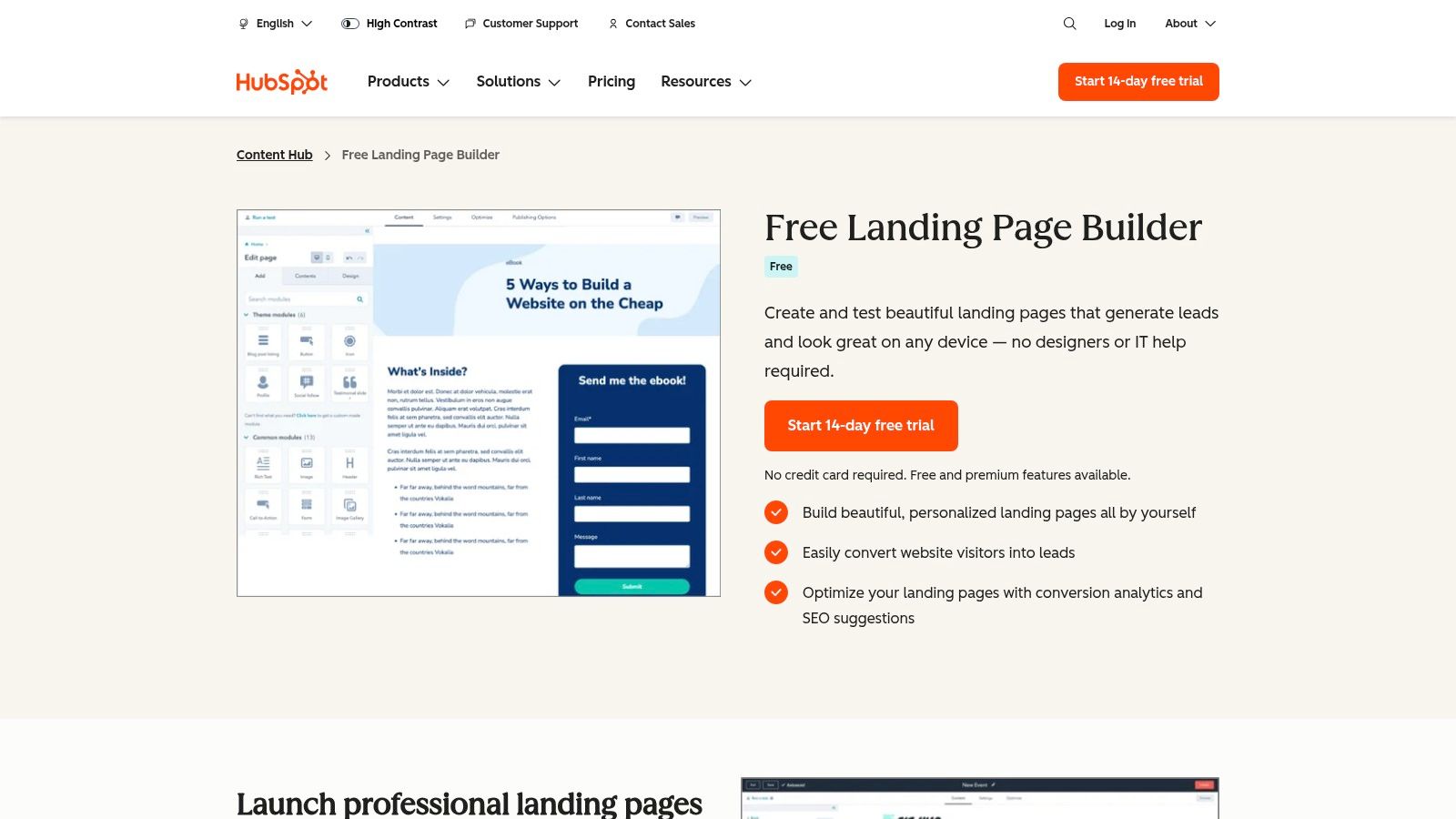
As a free landing page builder, HubSpot’s value proposition is its seamless integration. You get a solid drag-and-drop editor that lets you launch campaigns quickly. While the free plan includes HubSpot branding and limits you to 20 landing pages, its true power is connecting your marketing efforts directly to sales outcomes within the same system. This native connection makes tracking ROI from your ads much simpler down the line.
Key features & limitations
The standout feature is the native CRM integration. Every lead captured is automatically added to your database, creating a contact timeline that tracks every interaction. This is brilliant for attribution and understanding the customer journey. You can build professional pages using pre-made templates, which are great for getting started, especially if you want to model some effective lead generation landing page examples.
The main limitations are the mandatory HubSpot branding on your pages and domain. You’ll also find that more advanced features like A/B testing, smart content, and custom reporting are locked behind the paid Marketing Hub Starter plan. The design customization is also less granular than a tool like Webflow, prioritizing speed and integration over pixel-perfect control.
5. Mailchimp
Mailchimp is the gorilla in the room for email marketing, but its landing page builder is surprisingly decent for what it is: a tool to grow your email list. It’s not trying to be a full-blown website builder. Instead, it’s laser-focused on creating simple, clean pages to capture leads, promote a product, or run a contest. For anyone already deep in the Mailchimp ecosystem, using it for landing pages is a no-brainer.
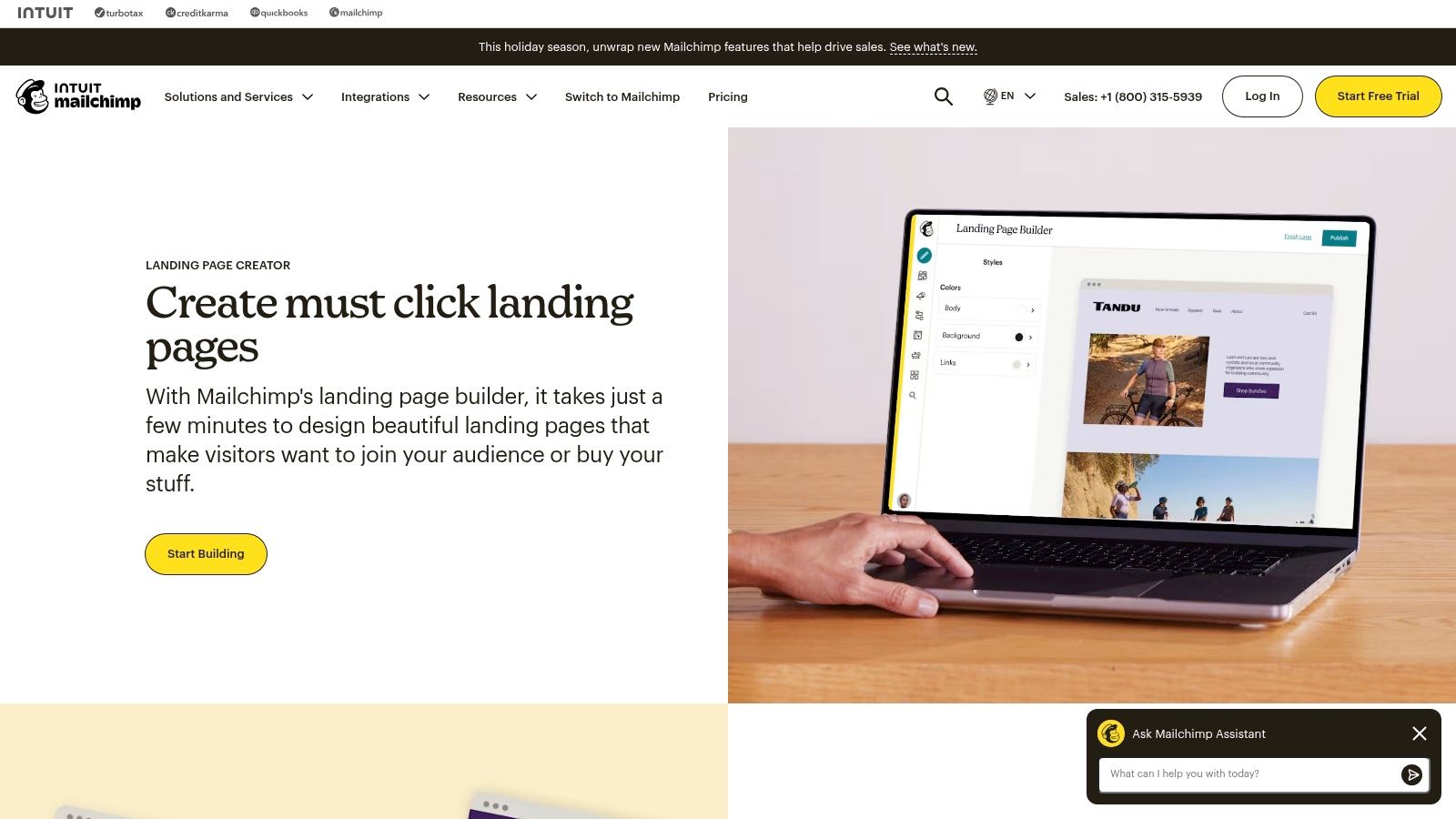
The primary advantage here is the seamless integration. Any leads you capture are piped directly into your Mailchimp audience, ready for your next newsletter or automation sequence. As a free landing page builder, it’s perfect for marketers who need to launch a lead magnet campaign quickly without messing with complex integrations or new software. The free plan lets you publish unlimited pages on a mailchimpsites.com subdomain, which is more than enough for targeted campaigns.
Key features & limitations
Mailchimp keeps things simple with a template-based, block-style editor. You can drag and drop content blocks, connect your Shopify store to pull in product images, and get a page live in minutes. It’s designed for speed and simplicity, not for pixel-perfect design control.
The limitations are clear. If you want a custom domain, you’ll have to upgrade to a paid Websites plan. Advanced features like A/B testing are also locked behind a paywall. Furthermore, you can’t embed certain custom code, which limits functionality for more complex use cases. It's built for email acquisition, and it doesn't pretend to be anything else.
6. Kit (formerly ConvertKit)
Kit, which you might know as ConvertKit, is a beast for creators. If you're running a newsletter, selling an e-book, or trying to get sign-ups for a webinar, this is your tool. It doesn't try to be a full-blown website builder. Instead, it’s laser-focused on one thing: converting visitors into email subscribers and customers with brutally effective, minimalist landing pages. It’s built on the principle that speed and simplicity outperform clunky, over-designed pages every time.
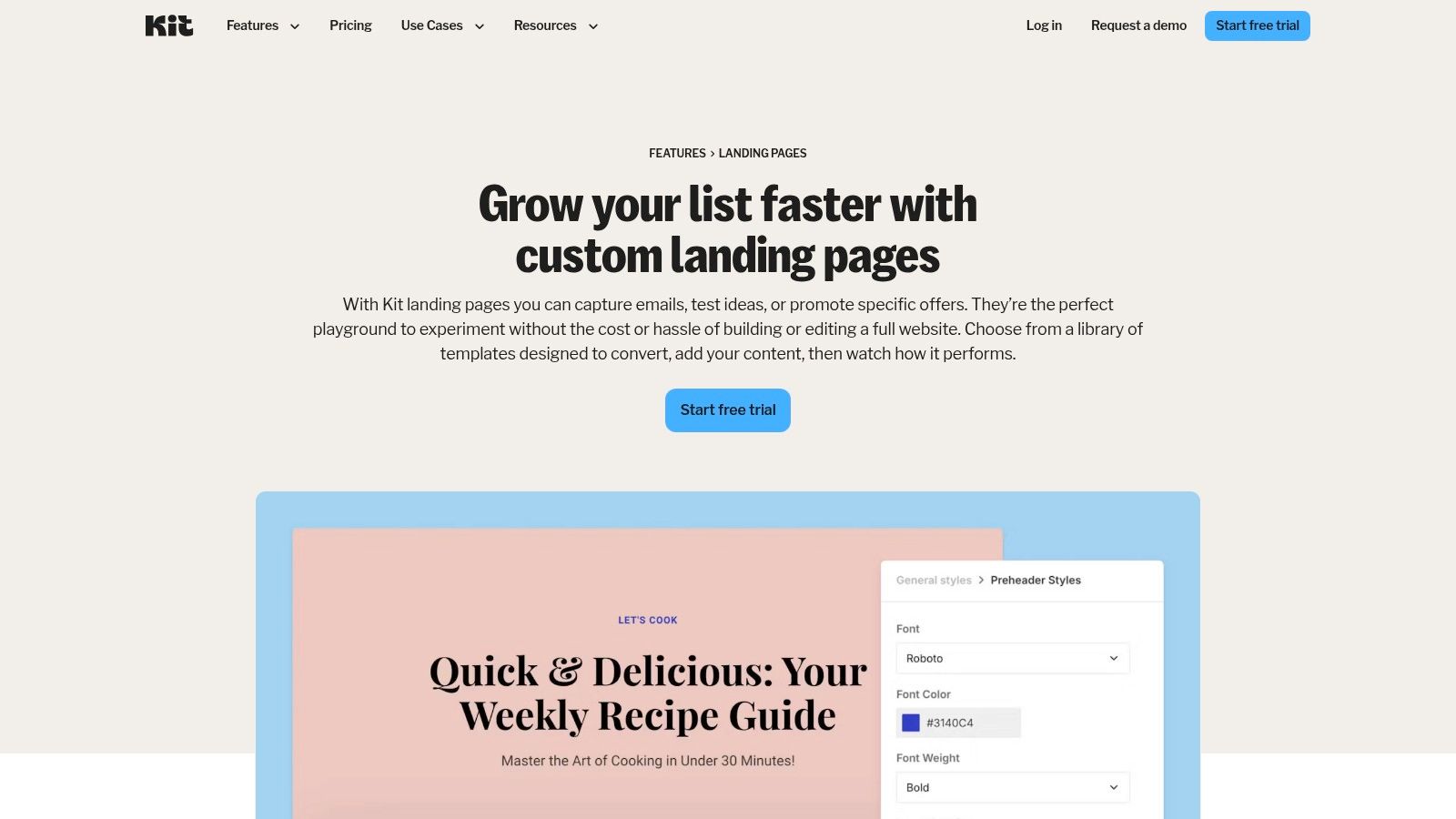
This platform is a fantastic free landing page builder for anyone whose primary goal is list-building. The free plan is incredibly generous, letting you build unlimited landing pages and manage your first 1,000 subscribers. It’s designed to be the first step in a powerful marketing funnel, getting people onto your list so you can eventually upgrade and unlock Kit’s world-class email automations. It's an ecosystem, not just a page builder.
Key features & limitations
The magic of Kit is its simplicity and integration. You can spin up a beautiful, high-converting page for your new lead magnet in minutes, not hours. The templates are clean, mobile-responsive, and designed to get the click without overwhelming the user with unnecessary design fluff. It’s a pragmatic approach that just works.
- Unlimited landing pages & forms: Build as many lead capture pages as you need.
- 1,000 email subscribers: Manage a sizable audience before you ever have to pay.
- Digital product sales: Sell digital products with a transaction fee, directly from your landing page.
The trade-off for this simplicity is a lack of deep design customization. You won't be building pixel-perfect, agency-level designs here. The tool is opinionated, guiding you toward what converts best for creators. Advanced features like automated email sequences and integrations require upgrading, but the free starting point is one of the most powerful available for list-builders.
- Website: https://kit.com/landing-pages
7. GetResponse
GetResponse is more than just an email tool; it's a full-on marketing automation platform that happens to include a solid landing page builder in its free-forever plan. This makes it a fantastic starting point for anyone looking to build a simple, integrated funnel without juggling multiple tools. If your primary goal is list-building and you want to nurture those leads immediately with email, GetResponse has you covered from day one. It's the practical, all-in-one choice for marketers who value efficiency over endless design customisation.
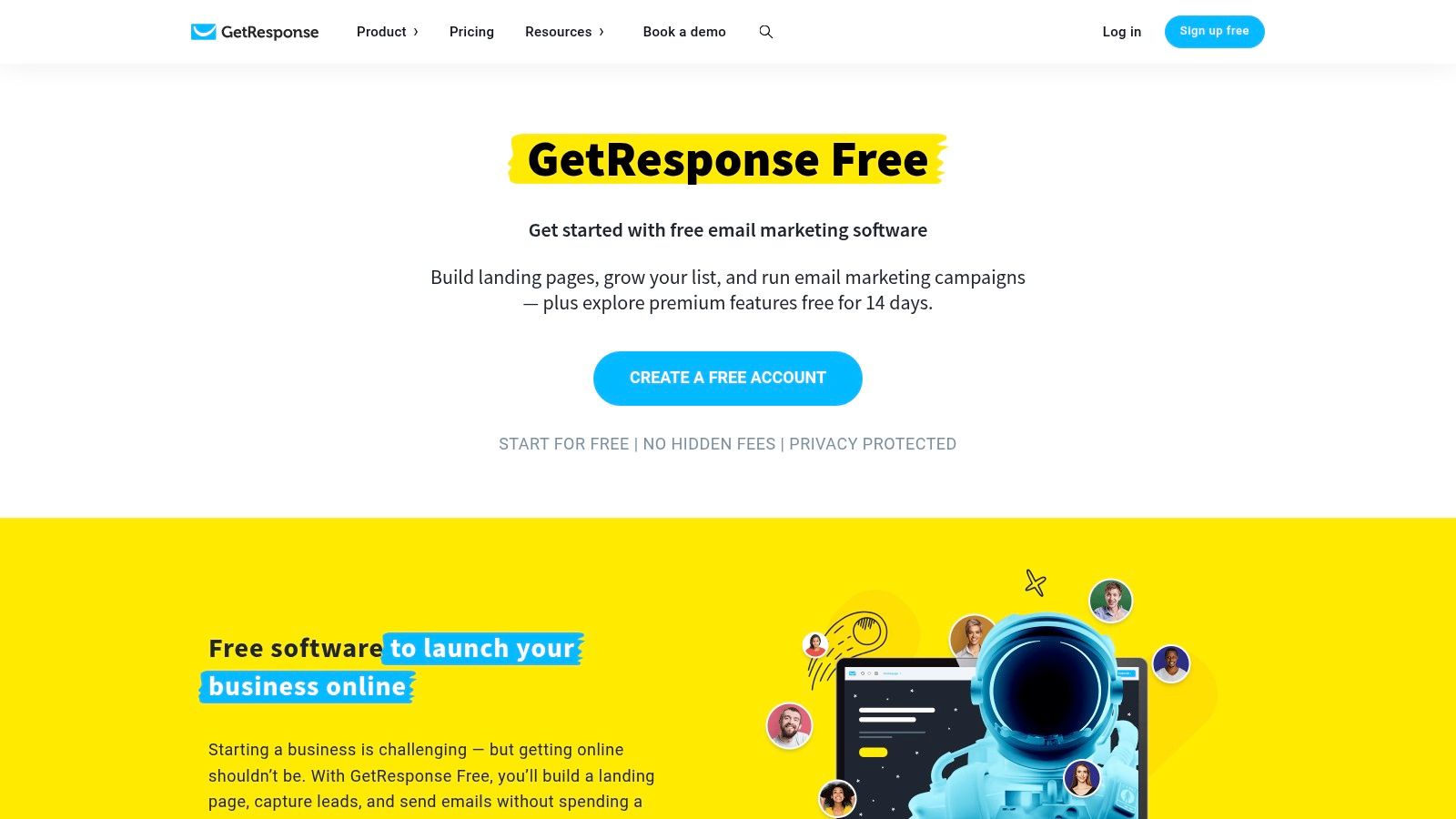
As a free landing page builder, GetResponse focuses on the entire lead-capture ecosystem. The free plan lets you create and publish one landing page, build a contact list of up to 500 subscribers, and send up to 2,500 newsletters per month. This integrated approach is its key advantage, allowing you to test a complete campaign from ad click to email signup and follow-up without spending a cent. It’s perfect for validating an offer or starting your first lead magnet campaign.
Key features & limitations
The value here is the synergy between the landing page and the email marketing engine. You can seamlessly connect your forms to your contact lists and even use their website popups. The drag-and-drop editor is straightforward, making it easy to get a page live quickly, and it includes essential tracking integrations out of the box.
However, the free plan has its caps. Advanced features like A/B testing and removing the GetResponse branding are reserved for paid tiers. The 1,000-visit limit means it’s best for smaller, targeted campaigns. Once you hit that or the 500-contact limit, you’ll need to upgrade, but it provides a clear and powerful growth path.
8. Systeme.io
Systeme.io isn't just a page builder; it's an entire marketing funnel platform crammed into one tool. Think of it as a Swiss Army knife for entrepreneurs who need to launch a lead generation or sales funnel without juggling five different subscriptions. It’s for the founder or marketer who wants to move fast, test ideas, and capture leads without overcomplicating the tech stack. If you need a simple, effective landing page hooked directly into an email sequence, this is your tool.
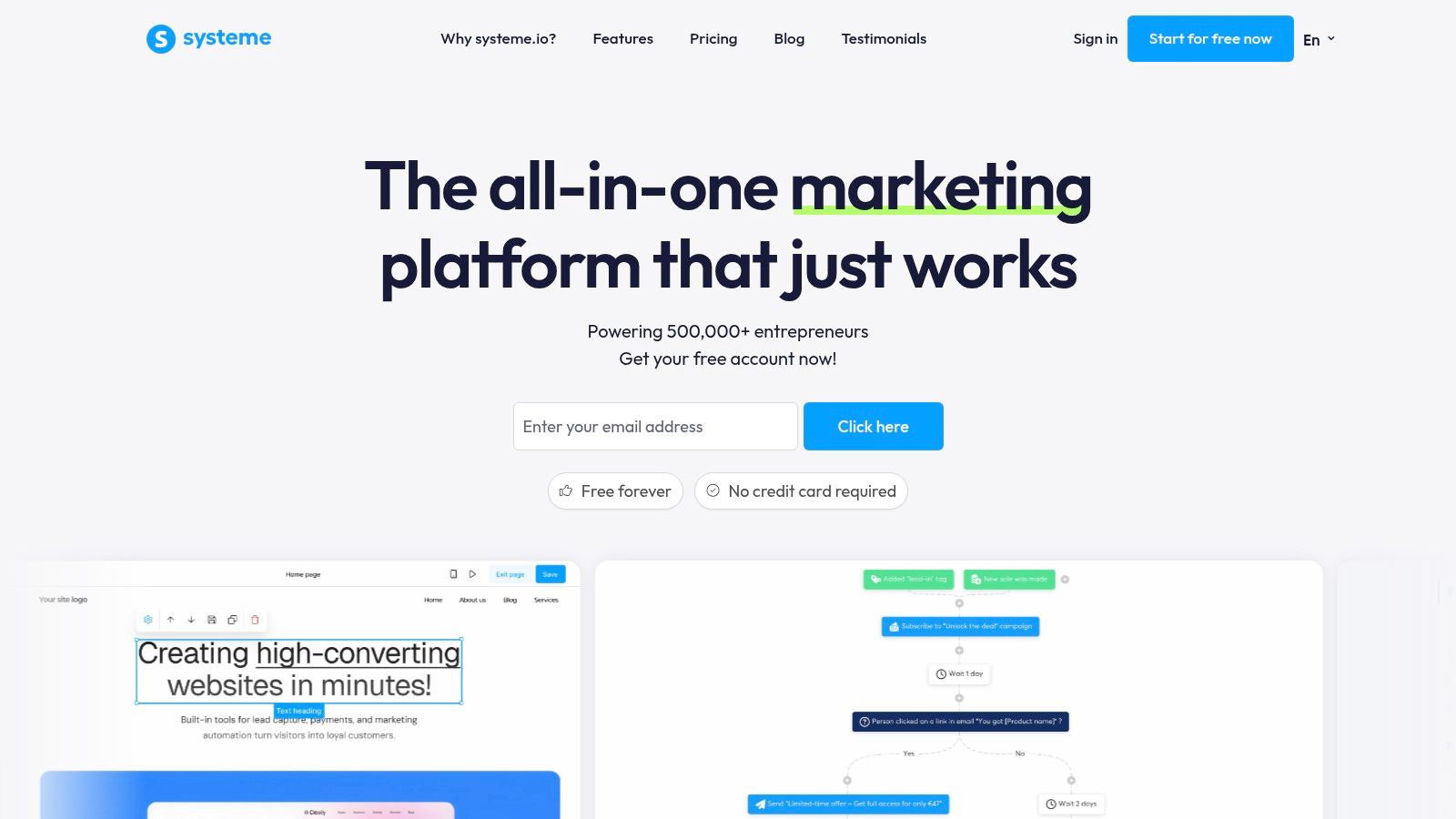
The platform’s major selling point is its all-in-one nature. For a lot of simple PPC campaigns, you just need a landing page, a thank you page, and a way to email the leads. Systeme.io bundles all that together, making it an incredibly efficient free landing page builder for straightforward marketing funnels. The free plan is surprisingly generous, letting you build multiple funnels with numerous steps, which is more than enough to get a campaign off the ground and validated.
Key features & limitations
The real value here is speed and integration. You can build a complete lead capture funnel with an email follow-up sequence in under an hour without ever leaving the platform. This is a massive advantage for solo operators or small teams who can’t afford to waste time duct-taping tools together. The visual builder is intuitive enough for beginners, focusing on function over flashy design.
The main limitation is design flexibility; you won't get the pixel-perfect control of Webflow. The templates are functional but can feel a bit basic. To use a custom domain or access more advanced features like A/B testing and marketing automation, you'll need to upgrade. Still, for a zero-cost entry point into funnel building, it’s hard to beat.
- Website: https://systeme.io
9. MailerLite
MailerLite is primarily an email marketing service, but its landing page builder is surprisingly robust and generous, making it a killer deal for anyone whose campaigns are tied to growing a subscriber list. It’s not trying to be a full-blown website builder; it’s a focused tool designed to get you from ad click to lead capture as quickly and efficiently as possible. For straightforward PPC campaigns where the main goal is an email sign-up, this is one of the most practical tools out there.
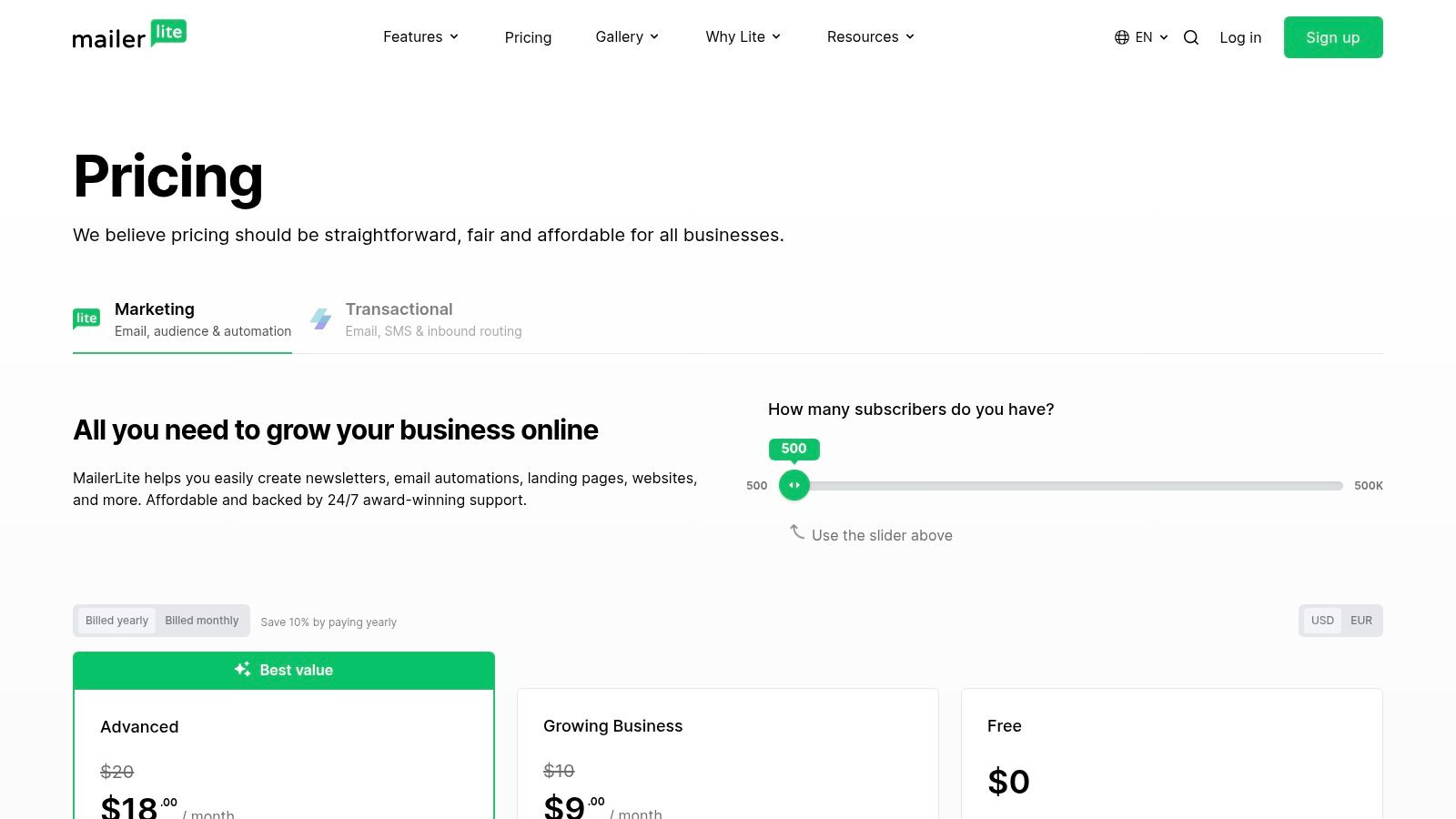
The platform’s strength lies in its ecosystem. As a free landing page builder, it shines because it seamlessly integrates with its own powerful email automation tools, which are also included on the free plan. The free offering is incredibly generous: you get up to 10 landing pages, 500 subscribers, and 12,000 monthly emails. This is more than enough to test multiple campaign angles or support an early-stage business without spending a dime.
Key features & limitations
The drag-and-drop editor is simple and intuitive, focusing on conversion elements like forms, countdown timers, and pop-ups rather than complex design animations. You can get a high-converting page live in under an hour, which is a huge win for fast-moving marketing teams. The editor also includes basic SEO settings and analytics integrations, so you can track performance right away.
The trade-offs are predictable but fair. Your pages will have MailerLite branding, and you’re limited to their templates unless you upgrade. Advanced features like A/B testing are also locked behind a paywall. Still, for a free tool that combines landing pages with a top-tier email service, it's an unbelievable value proposition.
- Website: https://www.mailerlite.com/pricing
10. Wix
Wix is one of the most recognized names in the website builder space, and for good reason. It’s built for speed and simplicity, making it a fantastic tool for those who need to get a landing page live yesterday without touching a line of code. Its pure drag-and-drop editor means what you see is truly what you get, which is a blessing for marketers who just want to focus on the campaign's message, not the technical implementation.
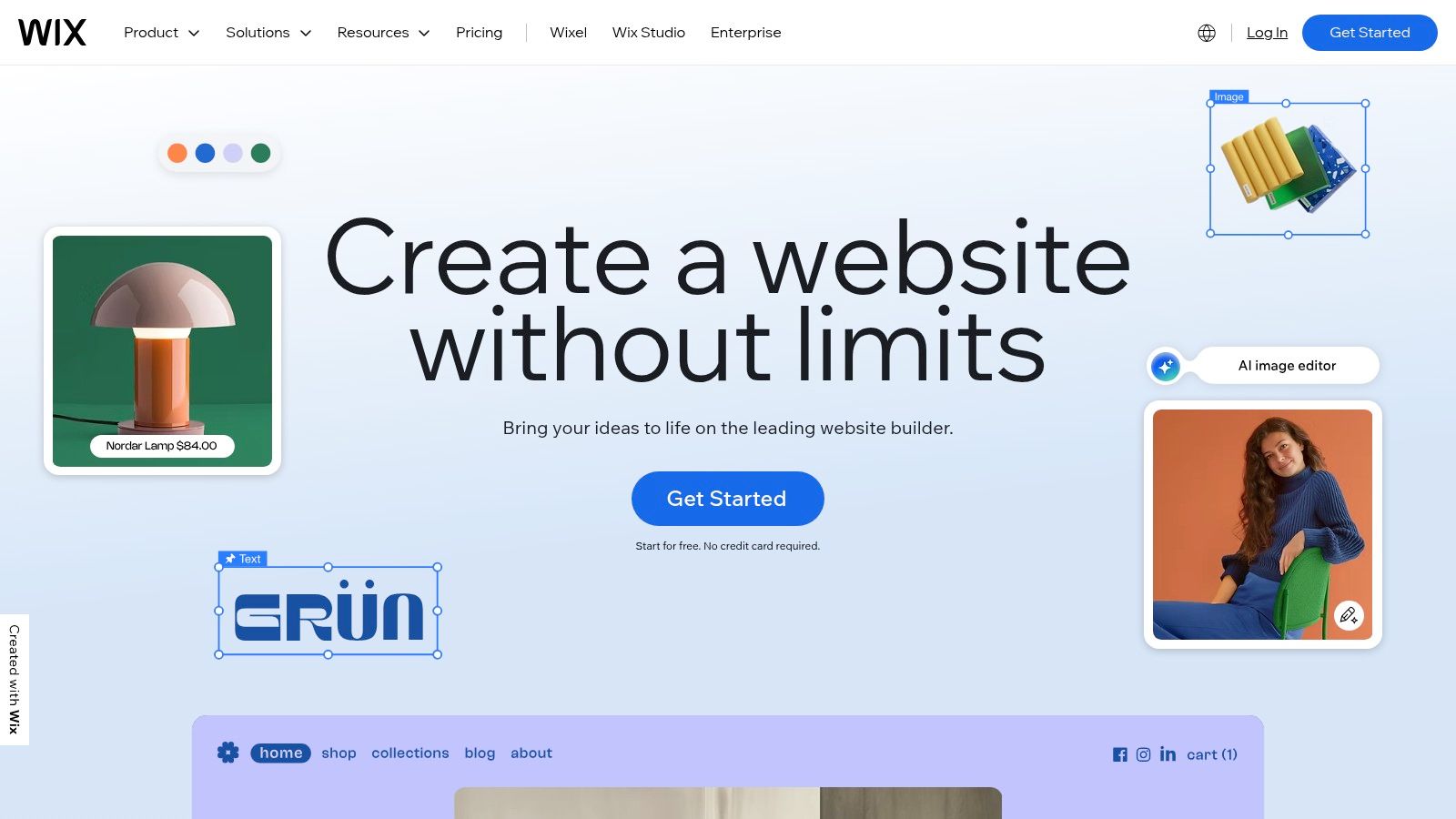
The platform is a solid contender as a free landing page builder thanks to its generous forever-free plan. You can publish a full landing page on a wixsite.com subdomain, giving you a live URL to point your ads to immediately. This is perfect for small businesses, local service providers, or freelancers wanting to test a simple offer without any upfront investment.
Key features & limitations
The biggest draw for Wix is its accessibility. You can jump in with one of their hundreds of templates and have a professional-looking page ready in under an hour. The built-in tools for forms, pop-ups, and basic marketing integrations are usually more than enough for a standard lead generation campaign.
Of course, the free plan has its trade-offs. You’ll have prominent Wix branding on your page and be stuck with a wixsite.com URL, which isn't ideal for building brand credibility. Also, pages can sometimes be on the heavier side, so you’ll need to be mindful of optimization to protect your PPC Quality Score.
- Website: https://www.wix.com
11. WordPress.com
WordPress.com is the hosted, simplified sibling of the open-source software that powers a huge chunk of the internet. For teams already familiar with the WordPress ecosystem, using it as a free landing page builder is a no-brainer. It leverages the intuitive block editor (Gutenberg) which allows you to piece together layouts using pre-built blocks and page templates, making it surprisingly fast for creating focused, single-purpose pages. It’s a solid starting point with a clear, scalable upgrade path.
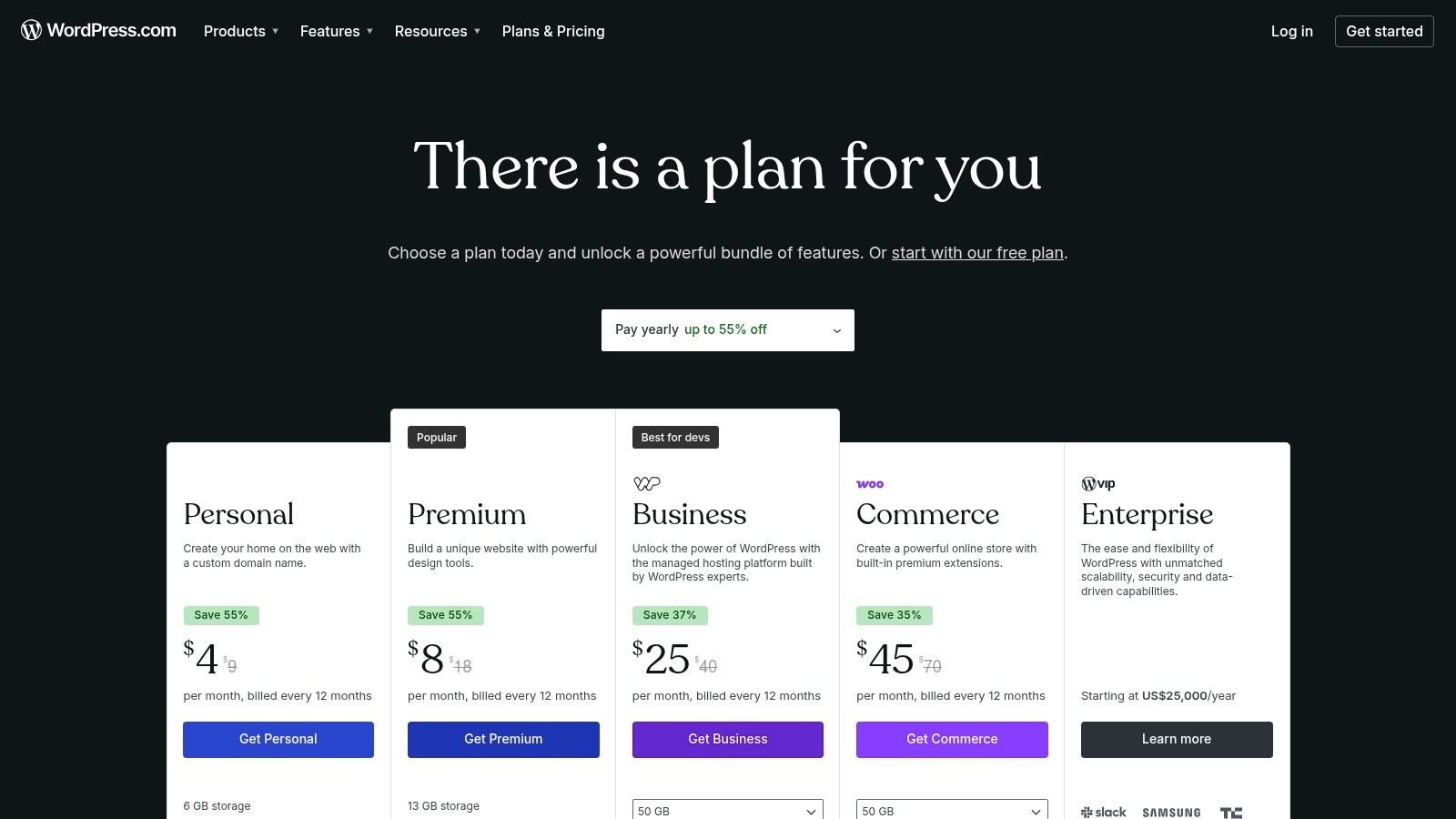
The platform’s real strength is its familiarity and the insane potential it unlocks once you decide to pay. The free plan is generous, offering unlimited pages on a wordpress.com subdomain. This is perfect for testing multiple campaign ideas or for clients who just need something simple up and running without the hassle of managing their own hosting. You get the core editor and basic analytics, which is enough to get started.
Key features & limitations
The block editor is more powerful than people give it credit for. You can create landing-page-style layouts by combining blocks, setting full-width sections, and hiding elements like headers and footers to minimize distractions. It’s a pragmatic approach that gets the job done without a steep learning curve, making it easy to hand off to clients or non-technical team members for content updates.
The free plan is obviously limited. It comes with WordPress.com branding, and you can’t install custom plugins or themes, which is where the real power of WordPress lies. Advanced features like A/B testing and deep analytics integrations require upgrading to a paid plan to unlock the plugin ecosystem.
- Website: https://wordpress.com/plans
12. Google Sites
Let's be blunt: Google Sites isn't going to win any design awards. It’s the utilitarian, no-frills tool you use when speed and zero cost are the only things that matter. Think of it less as a builder and more as a digital whiteboard. For PPC managers who need to spin up an internal project page, a rapid prototype for client approval, or an ultra-simple lead capture page for a quick test campaign, it gets the job done instantly. You won't build your brand's flagship page here, but you will validate an idea in minutes.
As a completely free landing page builder, its primary strength is its seamless integration with the Google Workspace ecosystem. If your workflow already lives in Google Drive, Sheets, and Forms, then using Google Sites feels like a natural extension. It’s perfect for those scenarios where you just need to get a functional page live on a sites.google.com subdomain right now without pulling out a credit card or dealing with hosting.
Key features & limitations
The value proposition here is pure simplicity and ecosystem synergy. You can drag and drop sections, embed a Google Form for lead capture, pull in a presentation from Google Slides, or show a location with Google Maps effortlessly. It’s all about leveraging the tools you already use.
The limitations are significant and obvious. The design controls are incredibly basic, with very few templates and minimal customization options. You get no native A/B testing, no advanced analytics beyond a simple Google Analytics integration, and SEO features are almost non-existent. It’s a tool for a very specific, limited use case.
- Website: https://sites.google.com
Top 12 free landing page builders — Feature comparison
| Product | Core features | Quality (★) |
Value / Price (💰) |
Target (👥) |
Unique selling points (✨) |
|---|---|---|---|---|---|
| dynares 🏆 | AI-generated ads, per-keyword landing pages, smart forms, Auto A/B Testing, real-time analytics, Google Ads/GTAG/HubSpot integrations | 💰 Free → Starter/Pro/Business → Enterprise (tiered; scale-based) | 👥 PPC managers, agencies, SMB growth teams | ✨ Per-keyword pages; revenue-aware conversion uploads; end-to-end automation | |
| Webflow | Visual designer, responsive controls, templates, CMS & Optimize on paid plans | 💰 Free starter; paid Site/CMS plans for custom domains & A/B | 👥 Designers, agencies, teams needing pixel control | ✨ High design flexibility; large template ecosystem | |
| Carrd | One-page templates, responsive, no-code editor, quick variants | 💰 Generous free; low-cost Pro to add forms & domains | 👥 Solo creators, agencies needing many quick variants | ✨ Ultra-fast single-page launches; very cheap variants | |
| HubSpot Free Landing Page Builder | Drag-drop pages, CRM-connected forms, basic SEO & analytics | 💰 Free CRM + pages; scale to paid marketing suites | 👥 Teams needing CRM-first lead capture & attribution | ✨ Native CRM integration; smooth path to automation | |
| Mailchimp | Template landing builder, commerce tie-ins, email integration | 💰 Free pages; custom domains on paid Websites plan | 👥 Email marketers, e-commerce promos, list builders | ✨ Tight email + landing workflow; product pulls | |
| Kit (ConvertKit) | Creator-focused templates, lead magnets, basic analytics | 💰 Free pages; upgrades for automations & reporting | 👥 Creators, newsletter builders, small product sellers | ✨ Clean high-converting templates for creators | |
| GetResponse | Drag-drop builder, tracking integrations, email & webinar path | 💰 Free tier; paid for unlimited visits & A/B testing | 👥 Small businesses testing funnels & webinars | ✨ Built-in tracking; easy upgrade to webinars/ecom | |
| Systeme.io | Visual funnels, email campaigns, payments & upsells | 💰 Generous free; paid for advanced funnels & domains | 👥 Course creators, small sellers, funnel users | ✨ All-in-one funnels + affordable paid features | |
| MailerLite | Editor for pages & sites, pop-ups, basic automations | 💰 Generous free limits; clear affordable upgrades | 👥 Small teams testing PPC angles; email-driven growth | ✨ Friendly free limits; quick variant launches | |
| Wix | WYSIWYG editor, templates, App Market, AI builder | 💰 Free forever with wixsite.com; paid to remove ads/domains | 👥 Non-technical marketers & small businesses | ✨ Fast non-technical builds; many add-ons/templates | |
| WordPress.com | Block editor, templates, unlimited pages on free plan | 💰 Free plan; paid for plugins/themes & analytics | 👥 Agencies, teams wanting familiar CMS & extensibility | ✨ Large plugin/theme ecosystem when upgraded | |
| Google Sites | Simple drag-drop, Workspace embeds, instant publishing | 💰 Completely free with Google account | 👥 Internal teams, rapid prototypes, quick PPC tests | ✨ Zero cost + Google Workspace integration; super fast |
My final take: Stop tinkering and start building
Alright, we’ve covered a lot of ground. We've looked at everything from full-blown website platforms like Webflow to integrated marketing suites like HubSpot and Mailchimp. The key takeaway here isn't a single "winner." The real insight is a shift in mindset.
The search for the best free landing page builder often becomes a trap. It's an endless cycle of feature comparisons and "what if" scenarios that leads to analysis paralysis. Frankly, it's a form of procrastination. A simple, functional page built on Carrd that's live and collecting data today is infinitely more valuable than a "perfect" page on Webflow that's still a draft a week from now. Speed of implementation is your biggest competitive advantage, especially in paid acquisition.
Your next move depends on your mission
The tech is just the vehicle. Your strategy is the engine. The 'best' tool is simply the one that removes the most friction between your idea and a live experiment. Let’s cut through the noise and make this practical.
- For performance marketers & PPC agencies: If you're running paid campaigns at any real scale, especially on Google Ads, you’re beyond the scope of most free, generic builders. You need a system built for revenue optimization, not just lead capture. This is where tools like dynares are in a league of their own, designed specifically to connect ad spend directly to revenue outcomes with dynamic, personalized experiences. Don't bring a knife to a gunfight.
- For creators & list-builders: Your world revolves around your audience and your email list. A tool like Kit (formerly ConvertKit) or MailerLite is a no-brainer. Their landing page builders are seamlessly integrated into their email marketing platforms. The goal isn't just to get a sign-up; it's to start a relationship.
- For SMBs & one-off projects: If you just need a clean, beautiful page for a single event, product launch, or portfolio, don't overcomplicate it. Webflow offers incredible design freedom (if you have the patience to learn it), while a tool like Systeme.io provides a surprisingly robust all-in-one solution if you plan to build out a simple funnel.
It's not about the tool, it's about the result
I can't stress this enough: the platform you choose is only about 10% of the equation. A brilliant landing page on a subpar builder will outperform a terrible page on the most expensive platform every single time. The real work, the high-leverage work, is in your offer, your copy, and your deep understanding of your customer's pain points.
Your landing page is the final step in a long chain of events you've set in motion with your ads. Getting the click is only half the battle; converting that click is where the money is made. To ensure your efforts translate into actual results, explore these valuable strategies to improve website conversion rates. Mastering these principles will have a far greater impact on your bottom line than which drag-and-drop editor you use.
The technology is an enabler, nothing more. Its job is to get out of your way so you can focus on what truly matters: your message and your customer. So, my final advice is simple. Pick one tool from this list that aligns with your most urgent need, build the simplest version of your page, and get it in front of real people. Go make it happen. 🚀
Tired of free builders that can't keep up with your paid ad campaigns? dynares is a purpose-built platform that generates dynamic, high-converting landing pages that connect directly to your Google Ads data, optimizing for revenue, not just leads. If you're serious about scaling your performance marketing, see what a revenue-focused system can do for you at dynares.