
Let's be direct. Most landing page advice is recycled nonsense. As a founder in the European tech scene, I’ve wasted more time and money on bad landing pages than I care to admit. The truth is, your page either converts or it’s a liability. A pretty design that doesn't drive action is just an expensive digital painting.
What really moves the needle is relevance—matching your page directly to what a user just searched for. This is where most campaigns fall apart. You run a dozen ad groups pointing to one generic page and wonder why your Quality Score is in the toilet and your CPC is through the roof. It’s because you’re serving a one-size-fits-all message in a world that demands personalization at scale. It's a dumb way to spend money.
I’m not talking about adding a first name token. I mean deep, structural alignment with user intent. The tech exists today to automate this, to create a unique, high-intent experience for every single keyword without an army of developers. That’s the game we’re playing now. It’s about building systems, not just pages.
In this list, I'm cutting through the marketing fluff to show you the platforms that actually understand this dynamic. We’ll look at options like Unbounce and Instapage, but also a platform like dynares that is rethinking the entire workflow. For each one, you’ll get screenshots, direct links, and a no-BS breakdown of why it works for specific use cases, from SMBs to PPC pros managing massive accounts. While many lists exist, like this review of the 12 Best Landing Page Builders of 2026, my goal here is to give you the founder's perspective on what truly scales. Let's dig in.
1. Dynares
Let’s be direct. Most landing page builders are just glorified web editors. You still do all the heavy lifting: writing copy, matching messages to ads, and then praying it converts. Dynares is different. It’s an AI-first platform built specifically to automate the entire Google Ads funnel, and it’s a powerhouse for any serious PPC manager or agency. Instead of building one generic page, it generates thousands of keyword-specific landing pages, ads, and forms at scale, ensuring every single searcher gets a perfectly relevant experience. This isn't just about making pretty pages; it's about building a high-performance system for paid search.
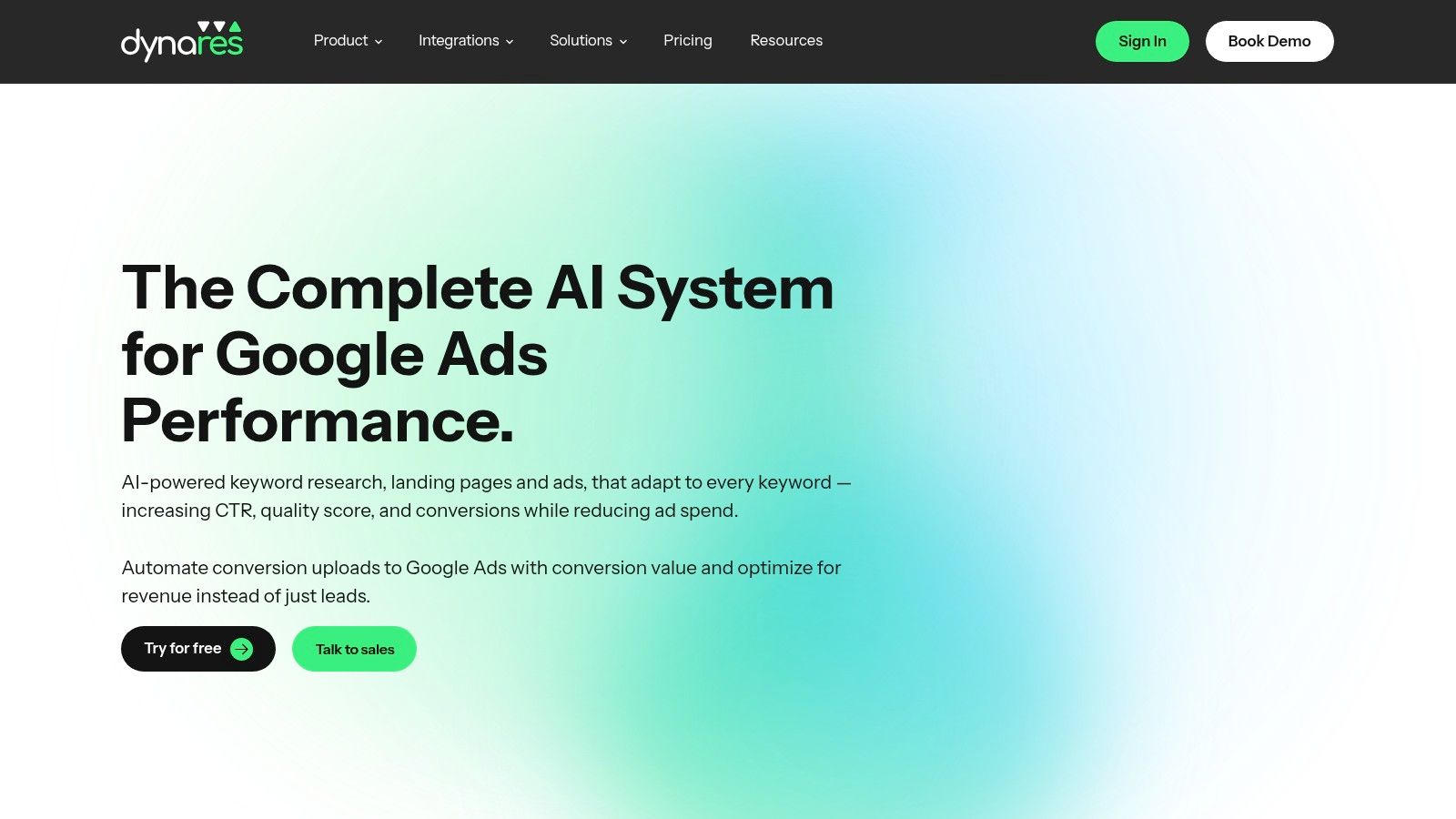
The core idea is simple but incredibly effective: message match at scale. When someone searches for emergency roof repair in London, they see an ad for exactly that and land on a page that echoes the same message, with a form ready to capture their details. This level of personalization is nearly impossible to achieve manually without a massive team. Dynares turns it into an automated workflow, which is why it's a top contender for the best landing page solution for performance marketers.
Why dynares stands out
What really sets dynares apart is its relentless focus on revenue, not just vanity metrics like clicks or even lead counts. It connects directly with Google Ads to upload conversion values, allowing you to optimize your campaigns for what actually matters: return on ad spend (ROAS). This closes the loop between ad spend and real business impact, which is a massive gap in many marketing stacks.
The platform is also built for efficiency. It’s an end-to-end system with features that eliminate tedious, repetitive tasks that drain a PPC manager's day. The AI is good, but it’s not magic; it needs quality input. Once you’ve done that groundwork, the platform takes over the repetitive scaling work. You can explore the platform's features further to see the full scope of what the AI landing page builder is capable of.
The social proof backs it up. We’re not talking about small wins here. Case studies show clients achieving an 8x increase in leads while their cost-per-acquisition (CPA) dropped by 68%. Another moved to a 79% search conversion rate. These are the kinds of numbers that get you promoted.
Pricing and accessibility
Dynares offers a transparent pricing model that scales with your needs, which I appreciate. There are no hidden fees or confusing credit systems.
- Free: A solid starting point to test the core functionality.
- Starter: Around €29/month, designed for freelancers and small businesses.
- Pro: Around €243/month, aimed at growing teams and agencies managing more accounts.
- Business: Around €765/month, for larger agencies and enterprises needing full scale.
They also offer custom enterprise plans, demos, and proper onboarding support. Yes, the higher tiers are an investment, but if you’re managing significant ad spend, the ROI from improved conversion rates and lower CPAs can make it a no-brainer.
Website: https://dynares.ai
2. Instapage
If you're moving past simple lead capture pages and into the world of high-spend, high-stakes paid acquisition, Instapage is a tool you need to know. It’s built from the ground up for performance marketers who live and die by their ROAS. This isn't your average small business page builder; it's a serious platform for teams that need to deploy and optimize dozens, or even hundreds, of landing page variations at scale. The entire workflow is designed around connecting ad spend directly to page performance.
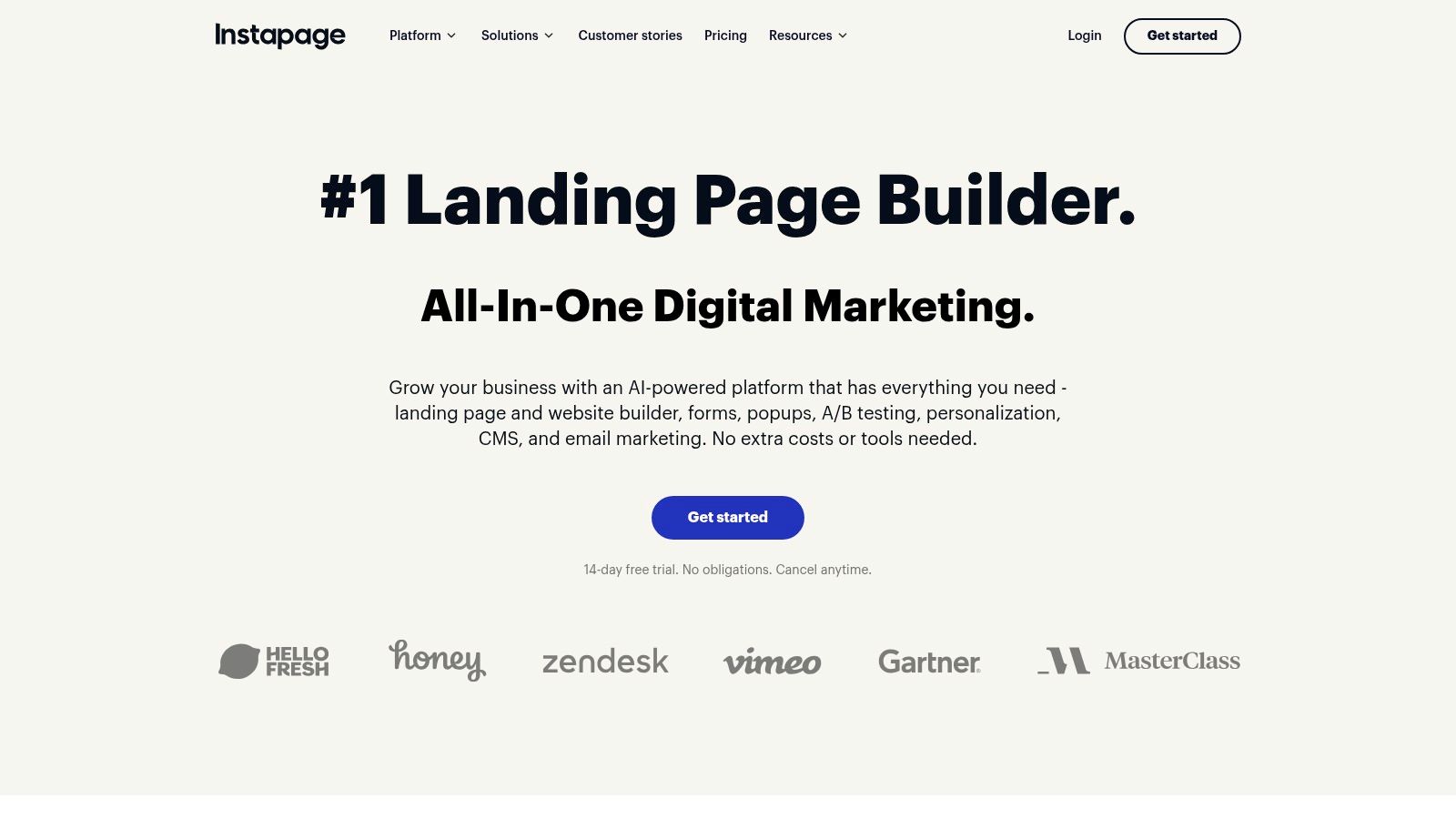
The core strength of Instapage lies in its deep personalization and testing capabilities. We're not just talking about changing a headline. With its Ad-to-Page Personalization, you can dynamically swap out text and images on your landing page to perfectly match the ad creative or keyword a visitor clicked. This 1:1 ad-to-page relevance is a game-changer for Quality Score in Google Ads and for creating a seamless user journey that builds trust instantly. For anyone serious about making a high-quality landing page, these features are essential; you can learn more about the fundamentals of how to create a landing page to see why this matters so much.
Why it's one of the best landing page platforms
Instapage stands out for its enterprise-grade features that are actually practical for PPC managers. The server-side A/B testing is faster and more reliable than the client-side (JavaScript-based) testing found in many other tools, preventing that annoying flicker effect where users see the original page for a split second.
Moreover, the collaborative features are genuinely useful. The ability for team members or clients to leave comments and annotations directly on a page preview speeds up the review cycle immensely. No more endless email chains with vague feedback. You can pinpoint exactly what needs to be changed.
The Collections feature is where Instapage really shines for agencies. You can create a master template and then programmatically generate hundreds of unique page variants for different locations, services, or ad groups. This is how you achieve personalization at a scale that would be impossible to manage manually.
What to know before you sign up
Instapage is a premium product with a price tag to match, starting with its Convert plan. It's an investment, so it’s best for businesses and agencies with significant ad budgets where a 1-2% lift in conversion rate translates to substantial revenue. For a solo founder just starting out, it might be overkill.
Visit Instapage: https://instapage.com
3. Unbounce
Unbounce is a veteran in the landing page space, and for good reason. It strikes a fantastic balance between creative freedom for non-developers and the serious conversion rate optimization (CRO) tools that performance marketers need. If you're an agency or an in-house team that needs to launch campaigns quickly, test ideas, and iterate without waiting on a developer queue, Unbounce is built for you. It’s a workhorse for fast-moving PPC teams.
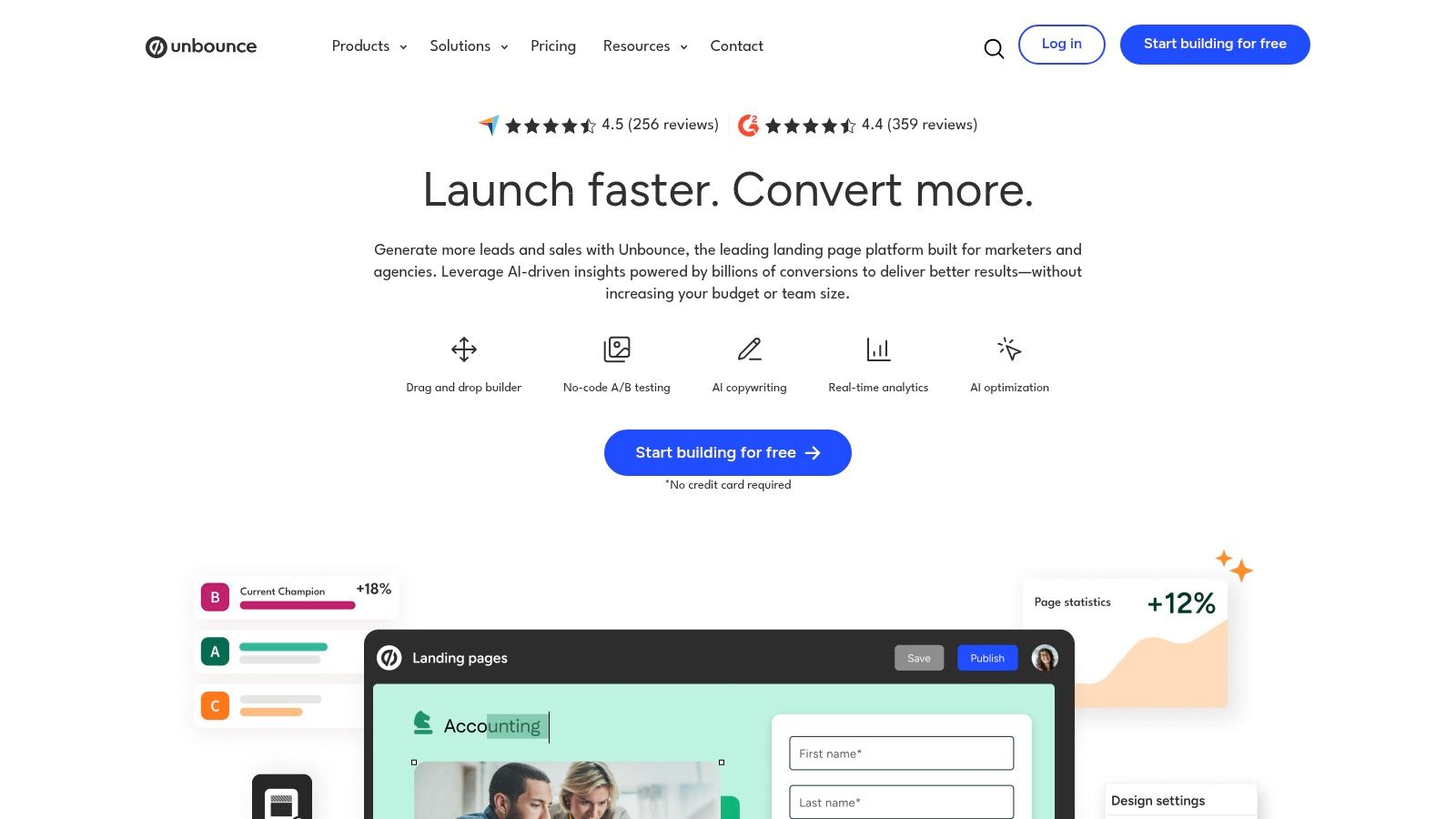
The platform’s core is its flexible drag-and-drop builder, which gives you a pixel-perfect canvas to design your pages. It’s less restrictive than many block-based editors, which is a huge plus for custom designs. On higher plans, Unbounce introduces its AI-powered Smart Traffic feature. Instead of just splitting traffic 50/50 for an A/B test, it analyzes visitor attributes and automatically starts sending more traffic to the page variant that is most likely to convert for that specific person. This is a smart way to get better results faster from your tests and a clear step towards real-time optimization. Getting these details right is critical; you can explore these landing page optimization best practices to see how features like this fit into a larger strategy.
Why it's one of the best landing page platforms
Unbounce's strength lies in its speed to market and accessible testing. The vast library of over 100 templates means you're never starting from a blank screen. For PPC managers, this means you can spin up a campaign-specific page in hours, not days. It's an ideal setup for running multiple offers or targeting different audience segments without getting bogged down in development.
The inclusion of popups and sticky bars within the same platform is also a big efficiency win. You can manage your lead capture forms, announcement bars, and exit-intent popups all in one place, ensuring consistent branding and messaging across the entire user experience. It consolidates tools that you might otherwise have to pay for separately.
I find the balance here just right for most mid-sized businesses and agencies. You get serious conversion tools without the enterprise-level price tag or complexity of a platform like Instapage. The visitor caps can be a bit annoying as you scale, but it's a predictable cost tied directly to your traffic growth, which is a fair trade-off for the value it delivers.
What to know before you sign up
While it’s powerful, be mindful of the visitor and conversion limits on each plan. If you have a high-traffic site, you could be forced into a higher-priced tier sooner than you expect. It's a great tool, but do the math based on your projected traffic to avoid any surprises.
Visit Unbounce: https://unbounce.com
4. Leadpages
For small businesses, freelancers, and agencies that need to move fast without a massive budget, Leadpages is a rock-solid choice. It’s designed for simplicity and speed, stripping away the enterprise-level complexity to focus on what matters most for smaller teams: getting a high-quality landing page live quickly and affordably. It's built on a foundation of proven templates and straightforward tools, making it one of the best landing page platforms for users who aren't full-time conversion rate optimization specialists.
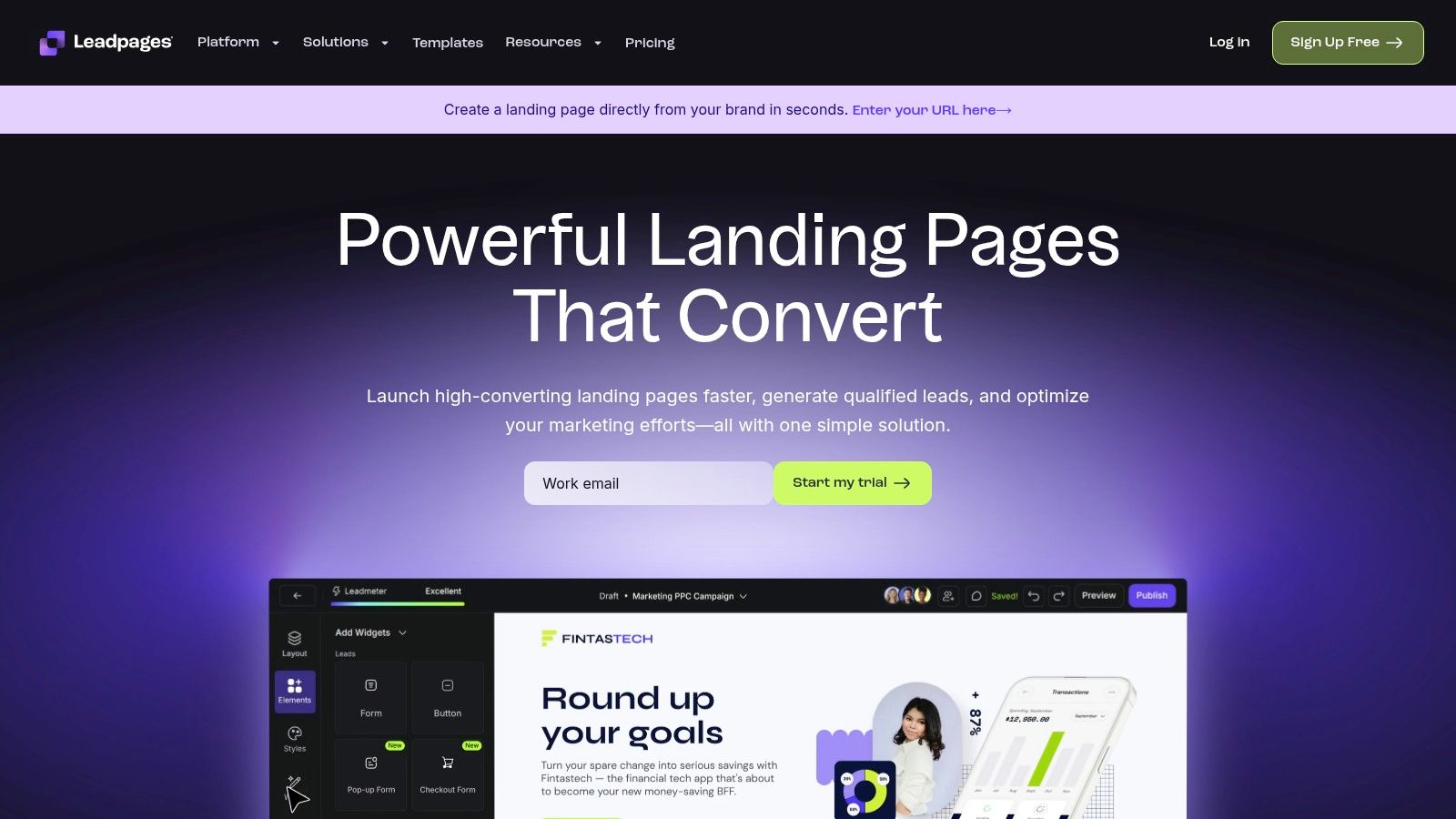
The core value proposition of Leadpages is its predictable pricing and generous limits. Unlike many competitors that charge based on traffic or leads, Leadpages offers unlimited traffic and leads even on its entry-level plan. This is a huge deal for anyone running paid campaigns where traffic can be spiky and unpredictable. You can send as much traffic as you want without worrying about hitting a limit and getting hit with a surprise bill. They also include built-in payments and checkout functionality, which is perfect for selling a simple product or service directly from the page.
Why it's one of the best landing page platforms
Leadpages shines because of its accessibility. You don’t need a developer or a designer to get started. The template library is extensive and sorted by conversion rate, giving you a data-backed starting point. The platform also includes built-in A/B testing, a critical feature for anyone serious about improving performance. While it might not be as granular as server-side testing, it's more than enough to validate headlines, offers, and calls to action. If you're just getting started with experimentation, you can get a primer on split testing landing pages to understand the fundamentals.
Furthermore, the inclusion of free domain hosting for one year (with an annual plan) and a free SSL certificate simplifies the technical setup. For a small business owner who just wants to connect their ads and start collecting leads, this removes a significant amount of friction.
I appreciate the pragmatism of Leadpages. It's not trying to be the most powerful tool on the market; it's trying to be the most practical. The fact that I can build a page, hook up a Stripe account, and start taking payments in under an hour without writing code is fantastic for quick-turnaround projects and validation tests.
What to know before you sign up
Leadpages is a fantastic value, but it comes with trade-offs. The design flexibility is more template-driven, so if you need pixel-perfect, completely custom designs, you might feel constrained. It also lacks the advanced personalization and dynamic text replacement features found in more expensive, PPC-focused tools. It's built for the 90% of use cases, not the 10% of high-end, granular optimization.
Visit Leadpages: https://www.leadpages.com
5. Swipe pages
When page load speed is a non-negotiable part of your paid media strategy, Swipe Pages should be on your radar. It's a performance-focused builder designed for marketers who understand that every millisecond counts, especially on mobile. This platform is built around one core idea: delivering blazing-fast pages that convert, making it an excellent choice for paid search and social campaigns where a slow-loading page can kill your CPA.
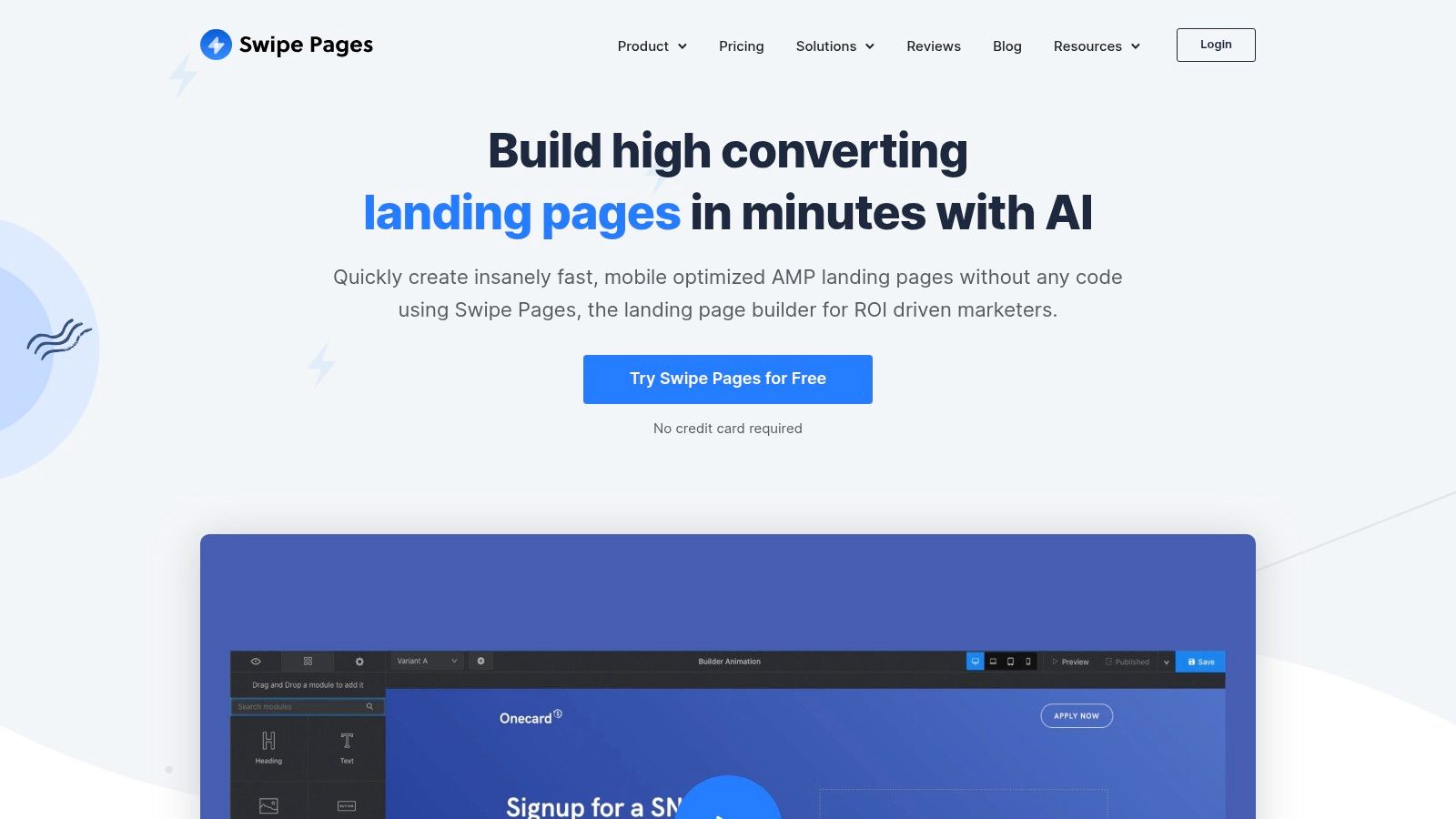
The platform’s main differentiator is its fanatical focus on speed, offering two compelling options: ultra-fast standard pages or Google-blessed AMP (Accelerated Mobile Pages). For a PPC manager, this is a direct lever to pull for improving Quality Score and reducing bounce rates from mobile traffic. Swipe Pages also includes dynamic text replacement, letting you align page headlines with ad copy for that crucial message match that builds visitor confidence. It's a simple, effective feature for crafting some of the best landing page experiences without a ton of manual work.
Why it's one of the best landing page platforms
Swipe Pages hits a sweet spot for agencies and performance marketers. Its agency-friendly features, like sub-accounts and multi-domain support, make managing client campaigns straightforward. You can isolate client assets, provide them with their own login, and maintain brand separation without jumping through hoops. This organizational structure is a massive time-saver.
The mobile experience is another area where it really delivers. Beyond just responsive design, its unique Slides format lets you create a story-like, app-like experience for mobile visitors. This is far more engaging than simply stacking desktop elements vertically and can be a brilliant way to guide users through a narrative or product tour.
I appreciate the pragmatism here. They give you the option for AMP pages, which are incredible for speed on mobile search, but also acknowledge their limitations. Smartly, they also focus on making their standard pages incredibly fast, so you aren't forced into AMP if you need custom scripts or more complex tracking. It’s a tool that respects the marketer's need for both speed and flexibility.
What to know before you sign up
Swipe Pages is very competitively priced, making it accessible. However, be mindful of the visitor caps on its lower-tier plans. While generous, high-traffic campaigns might push you into a higher plan or incur overage fees, which is something to factor into your budget.
Visit Swipe Pages: https://swipepages.com
6. Landingi
Landingi has carved out a nice spot for itself as a flexible, all-in-one landing page platform that scales well for both growing businesses and agencies. It's not trying to be the most complex enterprise tool, but it's far more capable than a basic page builder. The focus here is on providing a robust set of features, including AI assistance and smart reusable sections, while maintaining a price structure that doesn't immediately shut out smaller teams. It’s a solid middle-ground option for those who need more than the basics but aren’t ready for the high price of a top-tier platform.
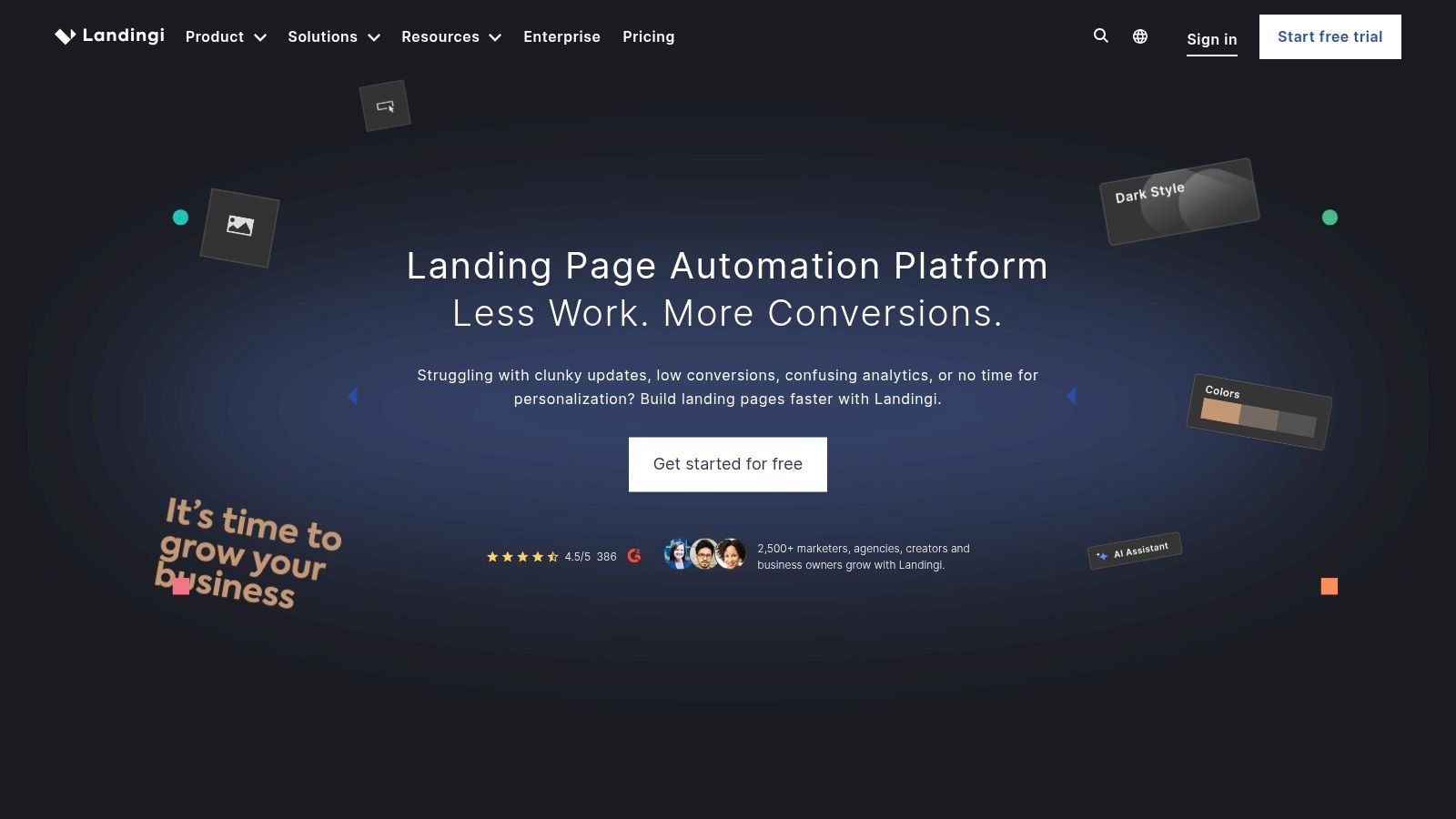
The platform is full of practical tools that directly address common pain points for marketers. Its Dynamic Text Replacement is great for improving ad message match, a key factor in building the best landing page experience for paid traffic. It also integrates an AI Assistant directly into the editor to help you overcome writer's block for headlines or body copy. And with a WordPress plugin and a constant stream of product updates, it feels like a platform that is actively growing alongside its users' needs.
Why it's one of the best landing page platforms
Landingi's key advantage is its balance of functionality and affordability, especially as you scale. The granular traffic tiers mean you pay for what you use, which is a breath of fresh air compared to platforms that force a massive price jump for the next level of traffic. This makes it cost-efficient for campaigns that are just starting to gain traction.
The team also moves fast, frequently releasing new features like scroll maps and other analytics tools that give you deeper insights into user behavior. For agencies, this rapid development cycle means the tool you invest in today will likely be even better in six months.
The Smart Sections feature is the real hidden gem. It works like a global block; you create a section, like a footer or a testimonial block, and can place it on dozens of pages. If you need to update it, you change it once, and it syncs everywhere. This is a massive time-saver for agencies managing multiple client sites or businesses with standardized page elements.
What to know before you sign up
While the pricing is flexible, be mindful of the visitor caps on the lower-tier plans. The entry-level Lite plan has a fairly low limit, so if you anticipate a successful campaign, you might outgrow it quickly. Some of the more advanced features, which are essential for serious optimization, are also reserved for the higher-tier plans.
Visit Landingi: https://landingi.com
7. Webflow
While many landing page builders are designed purely for lead capture forms, Webflow takes a different approach. It’s a visual web design platform that gives you absolute, pixel-level control over your design, making it the tool of choice when brand fidelity and a high-end look are non-negotiable. This isn’t a simple template-filler; it’s for teams who see their landing page as an extension of their core brand experience and need the flexibility to build something truly custom, without being forced to write code from scratch.
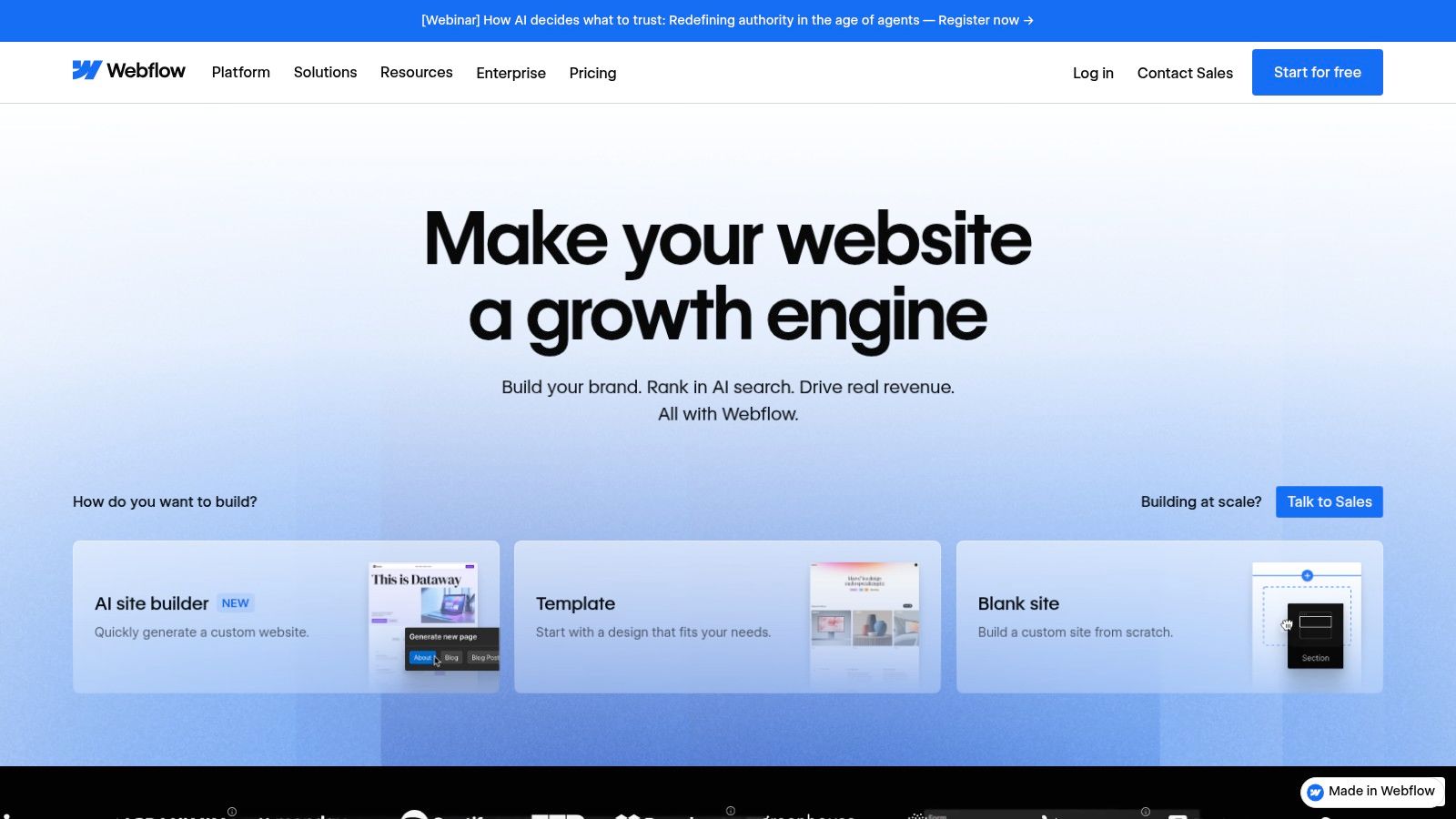
The power of Webflow for landing pages comes from combining its Designer with its CMS. You can design a perfect, conversion-focused layout and then use the CMS to create and manage dozens of dynamic page variants. Imagine creating a single template for a service page and then instantly generating unique versions for every city you target, each with a different headline, local imagery, and testimonials, all pulled from a simple database. This makes creating a genuinely good landing page that’s also scalable much more manageable.
Why it's one of the best landing page platforms
Webflow excels where design constraints kill conversion. You’re never stuck with a rigid template that doesn't fit your brand's story. You can build whatever you can imagine, complete with rich animations and interactions that can guide a visitor's attention directly to your call to action. This level of control is essential for creating a premium user experience that builds trust and justifies a higher price point for your product or service.
Furthermore, the performance is solid. With hosting built on a global CDN (powered by the Cloudflare network), pages load fast, which is a critical factor for both user experience and Google Ads Quality Score. You get the benefits of a custom-coded site’s performance without needing a dedicated backend engineering team to manage servers.
I use Webflow for projects where the brand and design are paramount. The ability to embed custom scripts is straightforward, so integrating tools like Google Tag Manager, Hotjar, or VWO for A/B testing is no problem. You get the design freedom of a custom site with the practicality of a managed platform. It’s a killer combination for marketing sites that need to both impress and convert.
What to know before you sign up
Webflow is a professional tool, and it has a learning curve. If you're coming from a simple drag-and-drop builder, you'll need to invest some time learning its box model-based design interface. It also lacks native A/B testing, so you'll have to rely on third-party solutions for experimentation, adding an extra step to your workflow.
Visit Webflow: https://webflow.com
Top 7 landing page builders comparison
| Product | Implementation Complexity 🔄 |
Resource Requirements ⚡ |
Expected Outcomes 📊⭐ |
Ideal Use Cases 💡 |
Key Advantages |
|---|---|---|---|---|---|
| dynares | Moderate–High 🔄: initial setup for templates, keywords and brand checks | Low engineering, needs Google Ads/GTM/HubSpot access; tiered subscription costs | High 📊⭐: keyword-level personalization → higher CTR/conv., lower CPC/CPA; revenue-focused bidding | PPC managers, agencies, SMB growth teams needing large-scale ad→page personalization | Automates thousands of ad–page pairs, uploads conversion values to Google Ads, Auto A/B testing, real-time analytics |
| Instapage | High 🔄: enterprise workflows and server-side experiments demand setup | Higher budget and cross-functional teams for testing and review | Strong 📊⭐: robust experiment-driven lifts and tight ad relevance | Large paid campaigns and agencies requiring rigorous experimentation | Server-side A/B testing, heatmaps, ad-to-page personalization, programmatic page generation |
| Unbounce | Low–Moderate 🔄: drag-and-drop builder enables quick launches | Minimal dev effort; may need higher tier for AI Smart Traffic | Good 📊⭐: fast iteration and solid CRO on mid-scale budgets | Agencies and in-house PPC teams that value speed + testing without developers | Extensive templates, Smart Traffic AI optimization, easy publishing and forms |
| Leadpages | Low 🔄: template-driven, straightforward setup | Budget-friendly; limited technical requirements | Predictable 📊⭐: steady lead capture and cost control for SMBs | Freelancers, small agencies, lean marketing teams needing predictable value | Unlimited traffic on entry plan, built-in A/B testing and checkout, simple UX |
| Swipe Pages | Low–Moderate 🔄: fast publishes; AMP option requires tradeoffs | Emphasis on mobile performance; tracking adjustments for AMP | Fast ⚡📊: very low load times → improved mobile CPAs and UX | Paid search/social where load speed and mobile UX drive CPA | AMP support, mobile-first "Slides", dynamic text replacement, agency sub-accounts |
| Landingi | Moderate 🔄: setup for Smart Sections and AI editor to scale pages | Flexible pricing with granular traffic tiers; agency features available | Scalable 📊⭐: synchronized updates and cost efficiency as traffic grows | PPC teams and agencies needing reusable blocks and granular scaling | Smart Sections (global blocks), AI assistance, frequent product updates |
| Webflow | High 🔄: pixel-perfect design needs time and design/CMS skill | Design/CMS expertise; often requires third-party testing tools | High quality ⭐📊: bespoke branded pages with strong hosting performance | Marketing sites, microsites, and teams needing design fidelity and CMS workflows | Full design control, CMS-driven content, global CDN hosting and custom code flexibility |
Stop building pages and start building systems
So, we've walked through seven of the top players for building landing pages. From established names like Unbounce and Instapage to flexible platforms like Webflow, the market is full of options. But let's be blunt: if you're still thinking about building a landing page, you're already behind. It's a dumb, outdated approach.
The goal isn't to find the one, single best landing page. That concept is a myth, a ghost you'll chase forever while your competitors eat your lunch. Your market is not a monolith. It’s a collection of thousands of tiny, specific user intents, search queries, and pain points. The real game is building a system that can generate the perfect page for every single one of those contexts, at scale.
Your new mandate: scale relevance, not pages
The core takeaway from this entire article is a fundamental shift in mindset. Stop being a page builder and start being a system architect. The tools we’ve covered are the components, but the strategy is what matters.
- Manual but powerful: Tools like Instapage, Unbounce, and Leadpages give you the power to create, test, and personalize. They are solid, respectable choices for serious teams that want to A/B test their way to higher conversion rates. But it still requires a lot of your time and direct effort. You're the one in the driver's seat for every test, every variant, and every new page.
- Flexible but complex: A tool like Webflow gives you near-infinite design freedom. It’s fantastic if you have the technical and design resources to build something truly custom. The problem? It can be slow, and it wasn't built specifically for the rapid, high-volume needs of performance marketing. It’s a powerful tool, but not necessarily a fast one for PPC.
- Automated and scalable: The future, as I see it, is full automation. It's about letting smart systems handle the mind-numbing work of creating hundreds or thousands of keyword-matched page variants. This is the vision that drove me to build dynares. It's not just another builder; it's a dynamic assembly engine designed to create a unique page for every ad group, every keyword, every single time. It lets you focus on high-level strategy, not pixel-pushing.
How to pick your path forward
Choosing the right tool depends entirely on where you are and where you want to go. Don't just follow the hype. Be honest about your team's resources, your technical skills, and your ambition.
- For SMBs and solo operators: If you're managing a handful of campaigns and need to get solid, reliable pages up quickly, Leadpages or Landingi are great starting points. They are straightforward and get the job done without a steep learning curve.
- For agencies and in-house teams: If you have dedicated staff and a budget for optimization, Instapage and Unbounce are your workhorses. Their A/B testing and personalization features are top-notch and will allow you to systematically improve performance across client accounts or internal campaigns.
- For ambitious growth teams: If your goal is to truly dominate a paid search market and you believe in the power of technology to create a competitive moat, then you need to think about automation. This is where you graduate from building pages to building a conversion machine.
Ultimately, the tool is just a means to an end. The real victory comes from embracing a system that delivers relevance at scale. Stop thinking in terms of one-off campaigns and start building an always-on engine for growth. That’s how you win not just today, but in 2026 and beyond. Now, go build something great.
Ready to stop manually building pages and start building a system? dynares is the only platform that uses AI to automatically generate a unique, high-converting landing page for every single one of your Google Ads ad groups. Stop guessing and start scaling with dynares.


