
Finding good PPC ad examples shouldn't be a painful, time-wasting exercise. But let's be honest, most marketers spend hours staring at a blank screen or scrolling through endless search results, trying to guess what works. The usual advice is garbage: "just be creative" or "look at your competitors." This is lazy thinking. Great execution isn't about guesswork; it's about learning from data-backed successes and adapting proven formulas.
This article cuts through the noise. I’m not going to give you a fluffy list of vague ideas. Instead, you'll get my breakdown of the best platforms and tools to find high-performing PPC ad examples from any industry, for any keyword. We’ll dissect real ads, not just show you pretty pictures. You’ll see the exact headlines, descriptions, and calls-to-action that drive clicks and conversions.
My goal is to give you a repeatable system for inspiration and execution. You’ll learn where to find your competitors’ best ads, analyze their strategies, and access a nearly infinite library of creative assets. For those who want to dive even deeper, exploring comprehensive collections like these 100 B2B LinkedIn Ad Examples can provide another layer of specialized insight.
Think of this as your personal ad-spy toolkit. We’re going to cover everything from the free, official ad libraries like Google’s and Meta’s to powerful competitive intelligence tools that reveal historical ad performance. Let's get to it.
1. Google Ads Transparency Center
Why start with a Google tool? Simple. When you need to find authentic ppc ad examples, you go straight to the source. The Google Ads Transparency Center is the canonical, first-party library of every ad running across Google’s massive network. Forget third-party spy tools for a minute; this is ground truth. It's Google’s official, searchable database of ads served on Search, YouTube, and the Display Network. For anyone serious about PPC, this is required reading.
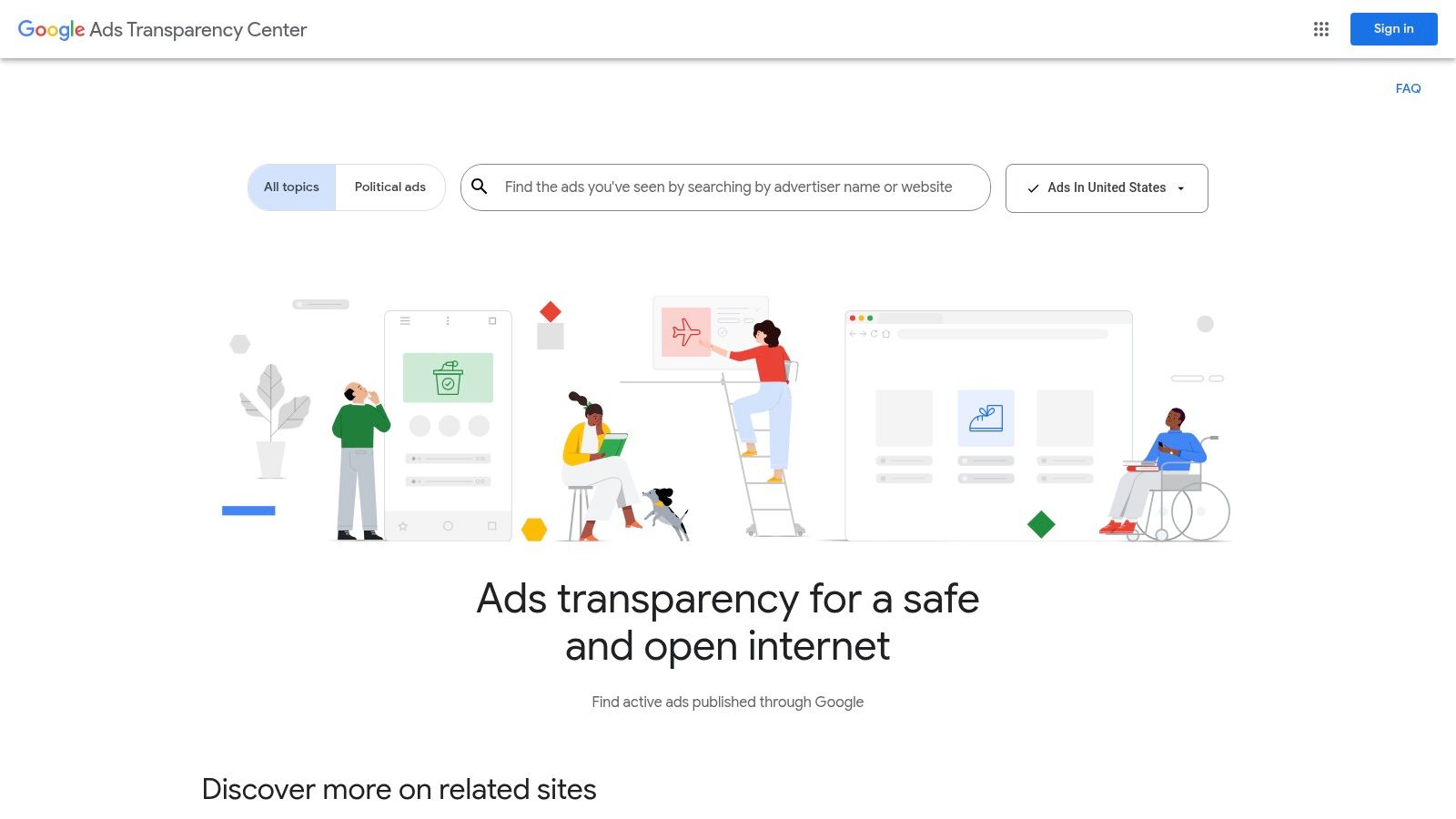
This platform isn't just another ad library. It’s a direct look into what your competitors are pushing live, unfiltered. You get to see the exact ad formats they’re using, the regions they're targeting, and even the last date an ad was seen. This is gold for competitive analysis and creative inspiration. No guesswork, just raw data.
Why it's a top-tier resource
The value here is authenticity. While other tools scrape and estimate, Google gives you a direct record. This is crucial for understanding the nuances of a competitor's strategy, from their core messaging in headlines to the specific calls-to-action in their video ads.
It's completely free. No account, no sign-up, no nonsense. The interface is straightforward, almost spartan. It's not flashy, but it’s functional and gets the job done without a steep learning curve. The workflow can feel a bit manual, but its directness is a strength.
Practical tips for using it
To get the most out of the Ads Transparency Center, think like a detective. Don't just look at one ad; look at the entire collection for an advertiser. Analyze their messaging patterns, how they adapt copy for different formats (text vs. video), and the consistency of their brand voice. This process is a masterclass in itself, and you can get even more insights when you improve your Google Ads performance by applying these observations directly to your campaigns.
It’s a foundational tool. While it lacks the advanced analytics of paid platforms, its value as a free, official source is unmatched. Use it as your first stop for competitive research.
Website: https://adstransparency.google.com
2. Meta Ad Library (Facebook/Instagram)
If Google’s library is the ground truth for search, Meta’s Ad Library is the bible for social PPC. This is where you go to see what’s actually working on Facebook and Instagram. It’s Meta’s own official, comprehensive database of every ad currently active on its platforms. For anyone running social ads, skipping this tool is malpractice. It’s your direct window into your competitor’s creative strategy, from video hooks to carousel ad angles.
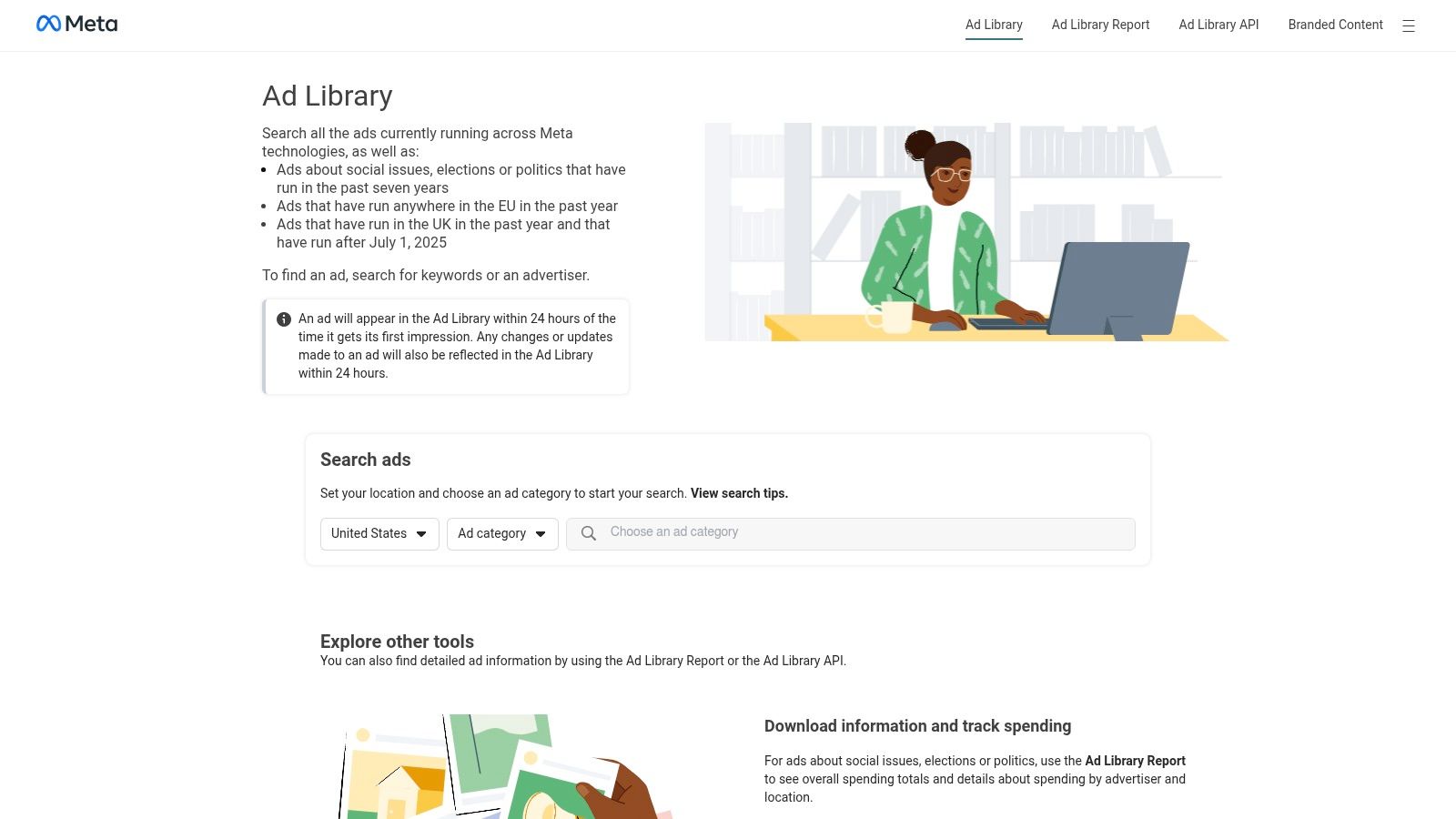
This isn't just about finding pretty pictures. It's about deconstructing what makes social ads convert. You can search by advertiser or keyword and see the exact creatives, primary text, and headlines they’re running in real-time. This resource is essential for understanding messaging trends, visual styles, and offer structures within your niche. You see the raw materials of successful social campaigns, not just a summary.
Why it's a top-tier resource
Authenticity and scope are the big wins here. You are looking at the exact creatives being served to users, not a third-party guess. The ability to search by a competitor’s Page and see their entire creative portfolio gives you an unparalleled strategic advantage. You can see how they test different copy, visuals, and CTAs across their campaigns.
It's totally free to use. You don't even need a Facebook account to browse. The interface is clean and gets straight to the point. Search by country, ad category, and advertiser/keyword. It’s fast and functional, though heavy usage can sometimes lead to temporary throttling, which is a minor annoyance.
Practical tips for using it
Use the Meta Ad Library for creative brainstorming and competitive intelligence. Look for patterns in top-performing brands in your vertical. What kind of user-generated content are they using? How long are their video ads? What pain points does their copy focus on? Remember, a great ad is only half the battle; ensuring it drives users to a compelling destination is just as critical, which is why you should always be refining your landing page design best practices in parallel.
This tool is indispensable for any modern PPC marketer. It provides the ppc ad examples you need to stay competitive on the world’s biggest social platforms, straight from the source.
Website: https://www.facebook.com/ads/library
3. Semrush – Advertising research
If Google’s library is the raw feed, Semrush is the intelligence report. This isn't just a list of ads; it's a competitive research suite built to contextualize ppc ad examples with performance data. You don’t just see what ads your competitors are running, you see the keywords triggering them, the landing pages they point to, and an estimate of the traffic they’re driving. For a professional PPC manager, this context is everything.
This platform shiifts the focus from simple observation to strategic analysis. It connects the dots between an ad creative, its target keyword, and its destination. Seeing a competitor's ad is one thing; seeing that their top-performing ad for "erp software" links directly to a free trial page is a completely different, and far more actionable, insight. Semrush makes those connections for you.
Why it's a top-tier resource
The power of Semrush lies in its integration. It’s not just an ad spy tool; it's a comprehensive PPC workflow platform. You can find an ad example, analyze its associated keywords, check the landing page, and then use the same suite to plan your own campaign. That unified experience is what makes it a staple for agencies and in-house teams.
- Access requirements: Basic features are available with a free account, but the real meat—the historical data, full ad copy reports, and detailed analytics—requires a paid subscription.
- Unique offerings: The "Ads History" feature is killer. It shows you an advertiser's ad timeline over the last 12 months, revealing seasonal campaigns, messaging tests, and strategic pivots. You also get deep insights into Product Listing Ads (PLAs) for e-commerce.
- User experience: The interface is data-rich and can feel a bit dense for newcomers, but it’s logically structured. Once you know your way around the Advertising Research toolkit, the workflow is efficient. It’s designed for professionals who need to move from analysis to action quickly.
Practical tips for using it
Use Semrush to build a complete competitive profile. Start with a domain, then dive into their "Ad Copies" report. Filter to see their most common headlines and descriptions to decode their core value propositions. From there, pivot to the "Ads History" to see how their messaging has evolved. Don't just copy their ads; understand the strategy behind them. Analyze the keyword-to-ad-to-landing-page funnel for their top-performing campaigns. This reveals their entire conversion strategy, not just their ad text.
It's a paid tool, but for anyone serious about getting an edge in paid search, the investment pays for itself. It turns raw ad data into a strategic roadmap.
Website: https://www.semrush.com/features/advertising-research/
4. SpyFu – PPC ad history
If the Google Ads Transparency Center is the ground truth for right now, SpyFu is the time machine. Its strength isn't just showing you a competitor's current ads; it's showing you every ad they've run for years. This historical context is invaluable for finding ppc ad examples that have stood the test of time, revealing the core messaging that truly works. SpyFu specializes in reconstructing a domain's PPC journey, keyword by keyword.
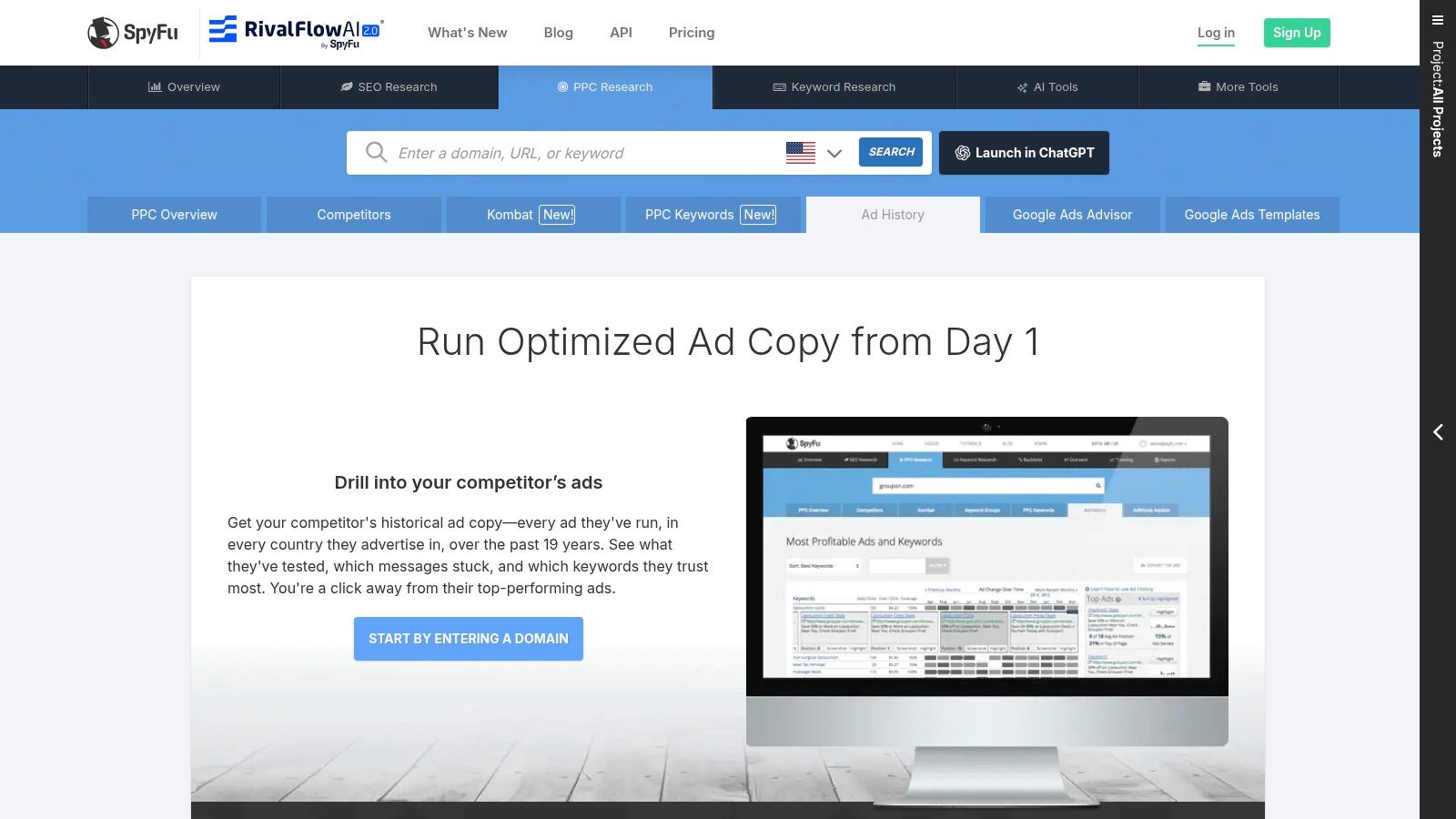
This platform is less about a wide net across all ad networks and more about a deep, surgical dive into Google Search ad copy. It helps you answer critical questions: What ad copy did my competitor run last Black Friday? Have they always used the same value proposition? Which ad headlines have they consistently run for the past three years? That kind of longitudinal data separates good copy from truly resilient, battle-tested messaging.
Why it's a top-tier resource
The unique value here is longevity. While other tools show you a snapshot, SpyFu gives you the whole photo album. Seeing how a competitor's ad copy evolves over months or years is like getting a free masterclass in what works in your niche. You can spot the A/B tests they ran and identify the winning variants they stuck with.
- Access requirements: SpyFu offers a limited free version with restricted data. Full historical access and deeper analytics require a paid subscription, with plans starting around $39/month.
- Unique offerings: The "Ad History" feature is the star. It allows you to see every ad variation tied to a specific keyword or domain over time, effectively creating a swipe file of proven search ads.
- User experience: The interface is data-rich and geared toward PPC professionals. It can feel a bit dense at first, but once you get the hang of the filters and reports, it becomes an incredibly fast tool for pure ad copy reconnaissance. It’s built for function over form.
Practical tips for using it
Use SpyFu to build a library of "greatest hits" for your industry. Search your top competitors and filter their ad history to find copy that has been running for six months or longer. These are their proven winners. Analyze the common themes, calls-to-action, and pain points they address. This insight is a massive shortcut when building your own campaigns, as you're starting with concepts that are already validated in the market.
It's a focused tool for search ad copywriters and strategists. While its display and social creative coverage is lighter, its deep dive into Google Search ad history is second to none. Incorporating these findings is one of the most effective PPC advertising strategies you can deploy for a competitive edge.
Website: https://www.spyfu.com/ppc/ad-history/
5. iSpionage
If you want to move beyond just ad copy and understand the entire funnel, iSpionage is your tool. It connects the dots between a competitor's ad and their landing page, which is a critical piece of the puzzle that many other tools miss. Seeing a great ad is one thing; seeing the page it drives traffic to is where the real strategy is revealed. For agencies and in-house teams who care about the full user journey, this connection is invaluable.
This platform isn't just a static library of ppc ad examples; it's a dynamic monitoring system. The SEM Campaign Watch feature lets you track competitors’ moves in near real-time, sending you alerts when they launch new keywords or ad copy. This transforms your research from a one-off task into an ongoing strategic advantage, keeping you a step ahead of market shifts.
Why it's a top-tier resource
The standout value of iSpionage is its emphasis on the ad-to-landing-page relationship. Their dedicated landing page gallery provides a goldmine of inspiration for conversion rate optimization. You can see how top advertisers are structuring their offers, designing their forms, and writing their sales copy, giving you a complete blueprint to model your own funnels after.
It has several paid tiers, starting with a budget-friendly option for smaller teams and freelancers, plus a free version with limited searches. The clean and user-friendly interface makes it easy to navigate between competitor ads, keywords, and their associated landing pages. It’s built for practical, day-to-day use without a steep learning curve.
Practical tips for using it
Use iSpionage to deconstruct your competitors' entire paid acquisition funnel. Start with a competitor's domain, review their most effective ad copy, and then immediately click through to see the landing pages they're using. Look for message match: does the promise in the ad align perfectly with the offer on the page? Analyze their calls-to-action, page layout, and social proof. This process will give you more than just ad ideas; it will give you a complete campaign strategy to test.
Website: https://www.ispionage.com
6. BigSpy
Sometimes you don't just need search ad examples; you need to see the entire creative ecosystem. This is where BigSpy comes in. It’s a multi-network ad intelligence tool that pulls creatives from Google, Meta, YouTube, and more, giving you a wider view of a brand’s entire paid strategy. If the Google Transparency Center is a surgical tool for Google Ads, BigSpy is the wide-net trawler for campaign ideas. It’s built for collecting creatives at scale.
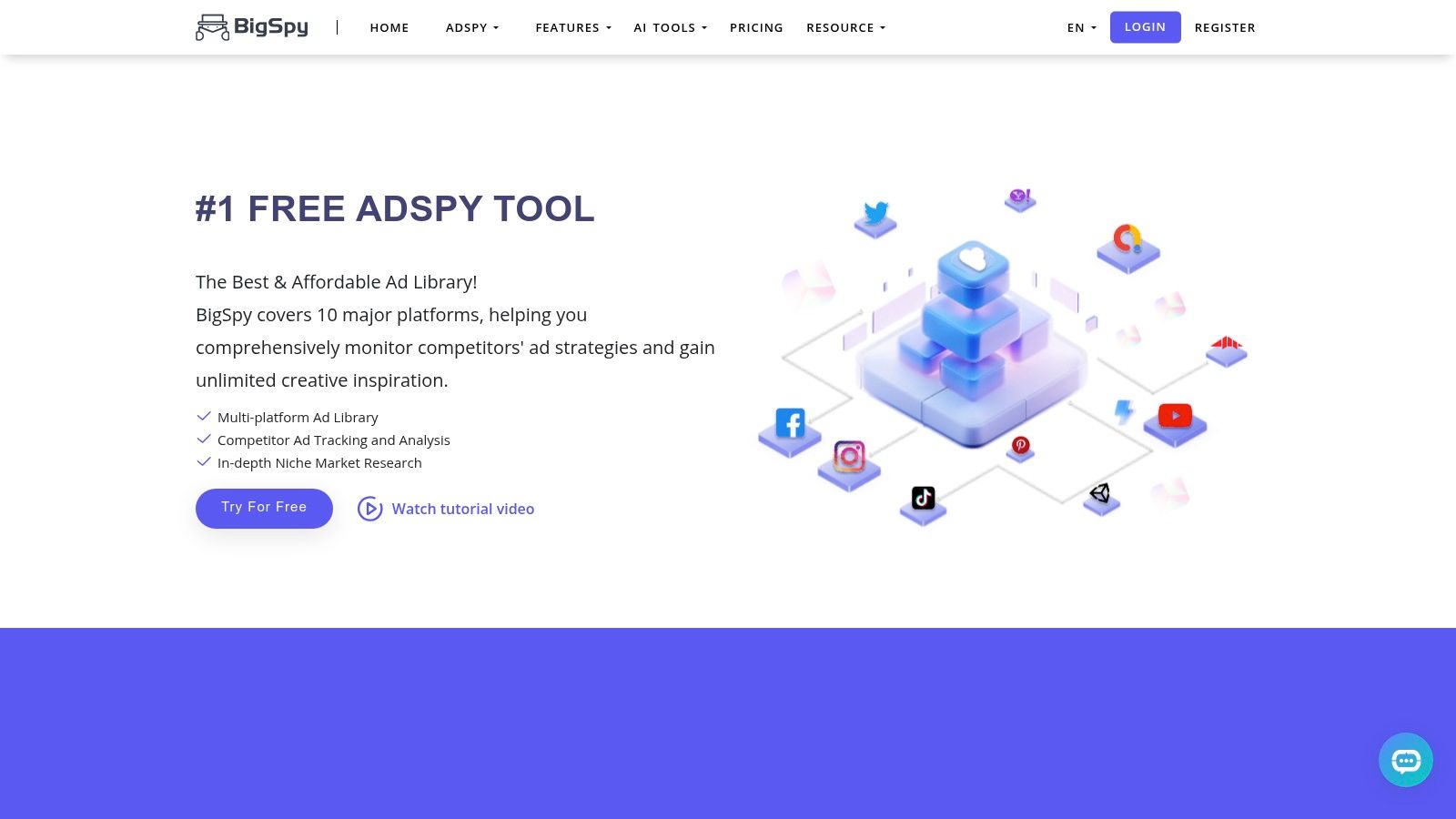
This platform excels at breadth. Instead of being siloed into one network, you can quickly see how a competitor’s messaging and visuals change from a Google text ad to a YouTube video ad or an Instagram carousel. For founders and small teams trying to understand the full marketing landscape, this cross-platform visibility is incredibly useful without breaking the bank. It's a pragmatic, cost-effective way to build a swipe file of ppc ad examples and social creatives.
Why it's a top-tier resource
BigSpy’s core value is its accessibility and scale. It democratizes competitive intelligence, offering a huge creative library that isn't locked behind a massive enterprise-level paywall. This makes it a go-to for marketers who need a broad look at the market without committing to a tool that costs thousands per year.
There’s a free plan with daily query limits, and the paid plans are very budget-friendly. They often run a $1 trial for three days of Pro access, which is a no-brainer to test out. The ability to download and track creatives is a massive timesaver. You can build your own library of high-performing ads to reference later, which is something you can’t easily do with official ad libraries.
Practical tips for using it
Use BigSpy for creative brainstorming and pattern recognition. Search for your main keyword, filter by Google Ads, and see what the top players are doing. Then, switch the filter to YouTube and see how they translate that message to video. This helps you identify the core value propositions that work across different formats.
Don't just look at ads in your own country. Use the filters to explore how competitors in other markets, like the US, are positioning themselves. They are often ahead of the curve, and you can borrow effective angles and copy frameworks before they become saturated in your region. It’s a simple hack for staying ahead.
Website: https://bigspy.com
7. AdEspresso (by Hootsuite) – Ad gallery
While the official ad libraries give you raw data, AdEspresso offers something different: curation. It’s a tool built by marketers, for marketers. Their Ad Gallery is a long-standing, hand-picked collection of social ppc ad examples, primarily from Facebook and Instagram, designed to spark creative ideas rather than just for snooping on one specific competitor. If you’re stuck in a creative rut, this is where you go for inspiration.
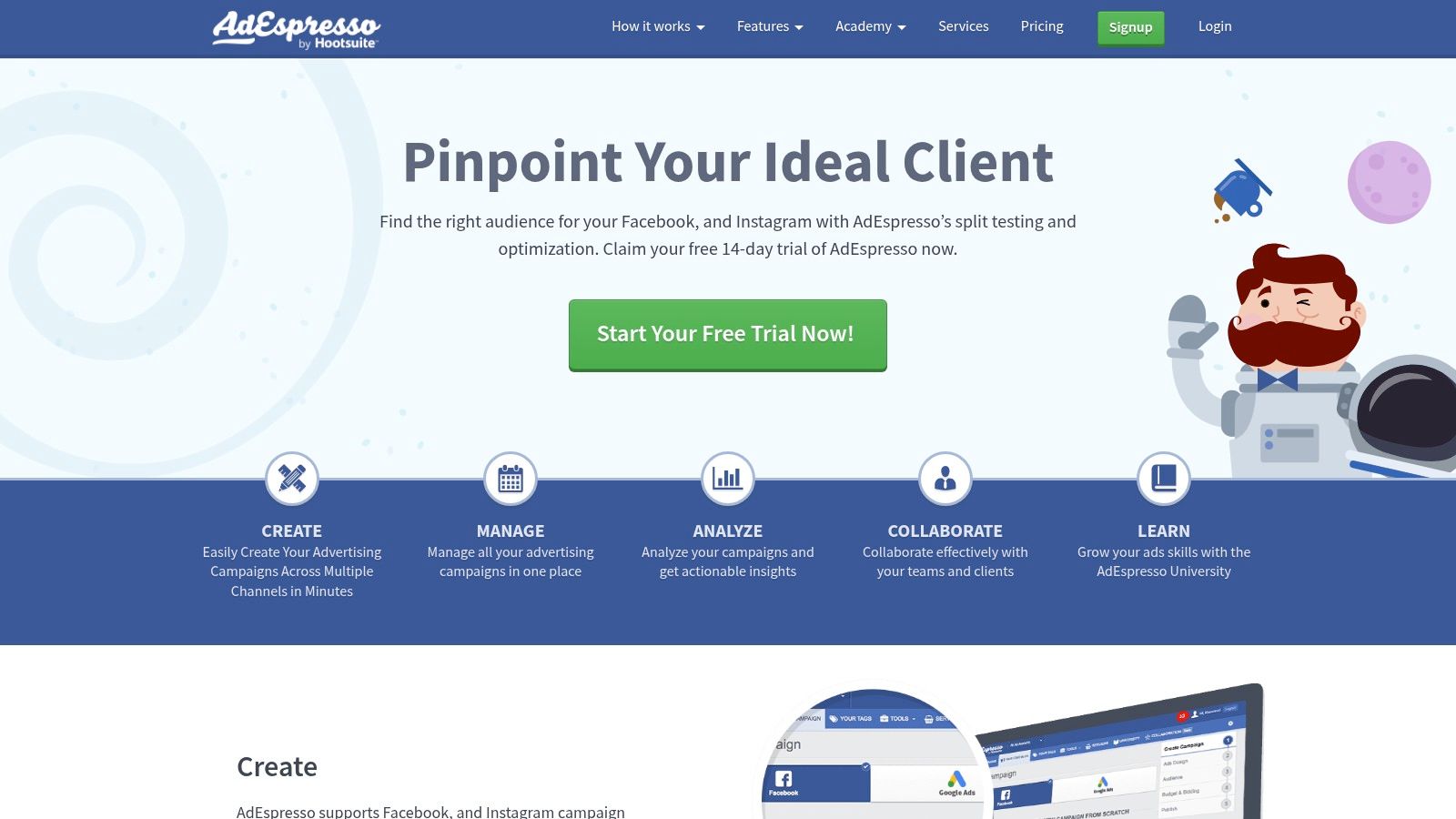
This platform isn't about giving you an exhaustive, unfiltered firehose of every ad on the internet. Instead, it’s about providing high-quality, relevant examples you can actually learn from. The focus on Meta platforms (Facebook/Instagram) means you get a deep dive into what works on social, from ad copy patterns to winning visual formats. It’s a specialized tool for a specific, but crucial, part of the PPC ecosystem.
Why it's a top-tier resource
AdEspresso’s value is in its educational approach. It doesn't just show you an ad; it often surrounds it with context, ebooks, and templates that break down why it works. This is less about competitive intelligence and more about creative acceleration and skill development. It’s a fantastic resource for brainstorming and getting your own creative juices flowing.
You can browse a sample of the ad gallery for free. Full, unlimited access to the gallery and its powerful filters requires an AdEspresso subscription. The gallery is clean, visual, and easy to navigate. The filters for platform, industry, and objective are intuitive, making it simple to find relevant examples quickly. It feels less like a database and more like a creative lookbook.
Practical tips for using it
Use AdEspresso for pre-campaign brainstorming. Before you even start writing copy, spend 30 minutes browsing ads in your industry. Look for common themes in imagery, headline angles, and calls-to-action. Don’t copy them directly; instead, identify the underlying patterns and psychological triggers they are using. Think of it as a launchpad for your own unique ideas. This approach pairs well with tools designed to help you rapidly deploy those ideas, like a dedicated PPC ad builder that can turn your inspiration into a structured campaign.
While its focus is on social, the principles of good creative are universal. The lessons you learn from top-performing Facebook ads can absolutely inform your copy and design for Google Display Network campaigns.
Website: https://adespresso.com/ads-examples/
Top 7 PPC ad sources comparison
| Tool (Overview) | Implementation complexity 🔄 |
Resource requirements ⚡ |
Expected outcomes 📊 |
Ideal use cases 💡 |
Key advantages ⭐ |
|---|---|---|---|---|---|
| Google Ads Transparency Center — first-party hub for Search, YouTube, Display ads | Low — simple searchable UI; manual exports can slow workflows | Minimal — free, no account needed | Canonical platform-sourced ad examples and advertiser verification | Due diligence, US Google ad research, sourcing authentic creatives | First-party, free, searchable by advertiser/region |
| Meta Ad Library (Facebook/Instagram) — official archive of active and political/issue ads | Low — easy search/filter; heavy use may hit throttling | Minimal — free to browse (login may affect access) | Live social creatives, Page-level examples, spend/audience for political ads | Social creative discovery, Page/vertical research, political ad transparency | First-party access to current Meta creatives and archives |
| Semrush – Advertising Research — paid competitive suite with ads + keyword toolset | Medium–High — multi-tool platform with learning curve | High — subscription required for full ad insights/exports | Exact ad copies, landing pages, keyword triggers and timelines | Competitive PPC research, planning, ad+keyword pairing, benchmarking | Integrated toolkit delivering actionable ad + keyword context |
| SpyFu – PPC Ad History — focused on historical Google Search ad copy | Low–Medium — streamlined for ad-copy reconnaissance | Medium — paid plans for full historical depth | Deep historical ad-copy trends and persistent winning messages | Historical trend spotting, building swipe files for Search ads | Strong long-term historical depth for Google Search copy |
| iSpionage — PPC intelligence with landing page gallery and campaign monitoring | Medium — setup for campaign watch and gallery use | Medium — budget-friendly paid tiers | Paired ad + landing page examples with monitoring and alerts | Agencies/in-house teams needing ongoing competitor monitoring and funnels | Practical landing page gallery plus campaign monitoring features |
| BigSpy — multi-network ad spy tool for large creative collections | Low — cross-platform search; scale/quality varies by network | Low — free plan with limits; low-cost trials available | Broad cross-network creative corpus for swipe files and exports | Rapid broad creative discovery across social and search at low cost | Cost-effective multi-network coverage and generous trial options |
| AdEspresso (by Hootsuite) – Ad Gallery — curated Facebook/Instagram examples and templates | Low–Medium — easy, curated browsing; full features via subscription | Medium — sample free; subscription unlocks full gallery/templates | Curated social ad examples, templates, and educational guidance | Social creative inspiration, template-driven testing on Meta platforms | Curated, marketer-oriented examples and practical templates |
From examples to execution: Now build something better
So, we've just spent a good chunk of time tearing down dozens of high-performing PPC ad examples. If you've made it this far, you get the point: inspiration is great, but execution is everything. A pretty ad is useless if it doesn't connect with the user, match their intent, and ultimately, drive an action.
The goal was never for you to just copy and paste these examples. It was to arm you with a framework for thinking like a top-tier performance marketer. It's about dissecting the psychology behind a headline, understanding the subtle persuasion in a description, and seeing how a strong CTA can bridge the gap between a click and a conversion. We've seen how giants like Shopify and nimble startups alike use the same fundamental principles.
They all obsess over the user. To craft truly effective ads, it's vital to understand their mindset. Delve into what is search intent to align your ad copy with what people are actually looking for. The best ads feel less like an interruption and more like an answer to a question the user was already asking.
Turning inspiration into action
Okay, enough theory. You’ve seen the examples, you’ve analyzed the strategies, and you’ve got a list of powerful tools at your disposal. Now what? The next step is to move from passive learning to active building. Don't get stuck in analysis paralysis.
Here’s a simple, pragmatic roadmap to get started:
- Define your angle: What's the one core message you need to land for a specific keyword group? Is it price, speed, quality, a unique feature? Pick one and build your ad around that single, powerful idea.
- Draft three variants: Don't just write one ad. Write three distinct versions based on the formulas we’ve covered. Try a benefit-led headline, a question-based headline, and a direct, feature-focused headline. Test them against each other ruthlessly.
- Audit your landing page: Look at your ad and your landing page side-by-side. Is the "scent" consistent? Does the headline on the page mirror the promise in the ad? If there's a disconnect, you're just burning cash. Fix it.
Choosing the right tool for the job
We looked at a variety of tools, from the free (Meta Ad Library) to the enterprise-grade (Semrush). Don’t just sign up for the shiniest object. Your choice should be dictated by your specific needs and budget.
For quick competitive analysis and creative inspiration, start with the free options like Google’s Transparency Center and the Meta Ad Library. They are goldmines if you know how to use their filters effectively. For a deep dive on a specific competitor, tools like SpyFu or iSpionage are brilliant. And for comprehensive market research, the heavyweights like Semrush shine.
The best tool is the one you’ll actually use. Start small, master its core features, and expand from there. The goal isn't to have the biggest marketing stack; it's to have the most effective one.
Ultimately, all these PPC ad examples, tools, and strategies are just a starting point. The real magic happens when you combine these insights with your unique understanding of your customer and your product. Take these frameworks, break them, remix them, and build something that doesn't just perform well, but that genuinely connects with the people you’re trying to reach. Now go build something better.
Tired of manually analyzing competitors and writing ad copy from scratch? At dynares, we're building an AI co-pilot that automates competitive research and generates on-brand, high-performance ad creatives in minutes. Stop guessing and start generating with dynares.


